Considering a scenario where your product team needs to roll out a new digital feature, say, a personalized dashboard or a smart chatbot, within just a week. The traditional route would involve lengthy design cycles, manual testing, and endless coordination. But with AI-powered rapid prototyping, the process looks very different.
Instead of building from scratch, your team uses AI to auto-generate wireframes based on user data, simulate real-time interactions, and even stress-test user flows—all within hours. By midweek, the prototype isn’t just functional—it’s optimized, tested, and ready for stakeholder review.
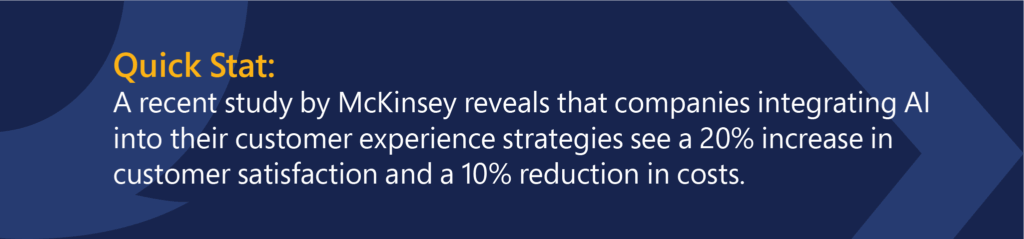
This shift is already happening. According to McKinsey, generative AI can reduce development time by 30–50%, and teams using AI in prototyping report up to a 40% increase in productivity. As industries push for faster innovation cycles, AI is helping product teams design smarter, test earlier, and build with greater confidence.
For enterprise teams – whether in financial services, retail, or manufacturing – AI-powered rapid prototyping isn’t just about speed. It’s about reducing the risk of costly late-stage failures, validating concepts with real data before committing resources, and getting stakeholder buy-in with functional prototypes rather than static mockups. Organizations partnering with trusted AI solutions providers are compressing what used to be 6-month development cycles into weeks.
Not sure how to take your prototype to a validated proof of concept? Download the AI PoC Roadmap, a step-by-step strategic framework to validate feasibility, manage risk, and build stakeholder confidence before scaling. Get the Free Roadmap →
In this blog, we dive into how AI-powered rapid prototyping is reshaping development—from BFSI and retail to energy and manufacturing—along with its biggest benefits, use cases, and roadblocks to watch for.
What is Rapid-Prototyping?
Rapid prototyping is a modern product development methodology focused on quickly fabricating a scale model or functional version of a product—often using computer-aided design (CAD) tools and automated manufacturing technologies. The primary goal is to test and validate concepts, features, user interactions, and performance early in the design cycle before investing in full-scale production.
When AI is integrated into this process, it transforms from a manual build-test-learn cycle into an automated, data-driven one. AI-powered rapid prototyping uses generative AI, machine learning, and predictive simulation to automate design creation, run thousands of test scenarios, and compress iteration cycles from weeks to hours.
Think of it as “trial and error” fast forward—instead of spending weeks or months developing a final product only to discover it doesn’t meet user expectations, teams can build and test multiple versions rapidly, learning from each iteration.
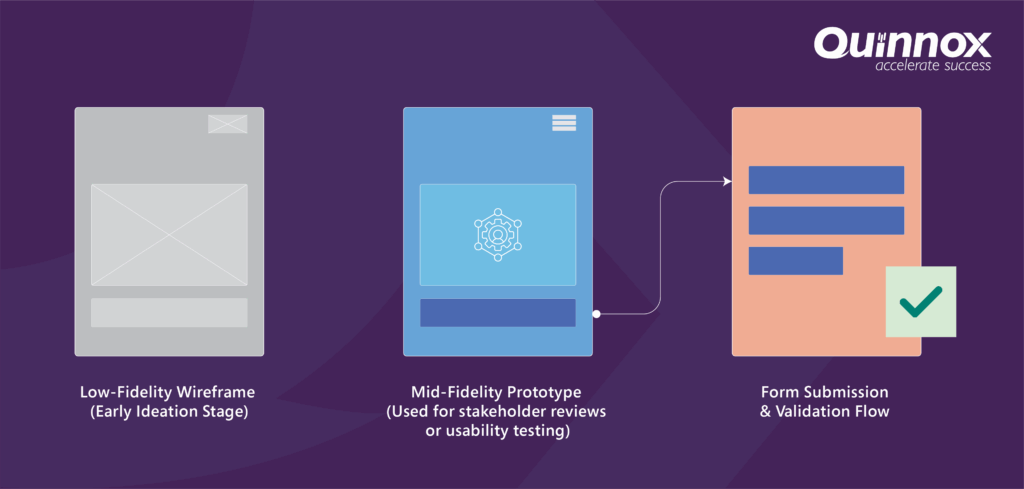
AI’s Transformative Touch for Rapid Prototyping
AI-powered rapid prototyping takes the traditional ‘build-test-learn’ approach to an entirely new level by embedding artificial intelligence and machine learning into every phase of the design and validation cycle. From automating design generation and running predictive simulations to shortening iteration cycles with data-driven feedback, AI introduces:
1. Automated Design Suggestions
AI analyzes historical performance data and user preferences to generate tailored design recommendations—cutting manual effort and enabling smarter decisions from the get-go.
2. Predictive Analytics for Risk Reduction
AI models can simulate real-world scenarios to identify stress points, potential failures, or bottlenecks early, preventing costly rework later in the cycle.
3.Generative Design for Optimal Variants
Lorem ipsum dolor sit amet, consectetur adipiscing elit. Ut elit tellus, luctus nec ullamcorper mattis, pulvinar dapibus leo.
4. Natural Language to Visual Prototype
Designers can now describe features in plain English (e.g., “a dashboard with dark theme and three analytics charts”) and have AI tools convert them into visual interfaces instantly.
5. Speed and Efficiency
AI drastically cuts down the time to build prototypes. McKinsey reports a 30–50% reduction in software development time with generative AI, particularly during design and testing phases.
6. Data-Driven Design Decisions
AI taps into user behavior, industry benchmarks, and market trends to guide prototypes that align with real-world needs—minimizing guesswork and maximizing usability.
7. Automated Testing & Feedback Loops
AI simulates user interactions, flags bugs, and analyzes heatmaps or session recordings—offering immediate insights for iterative refinement before launch.
8. Personalization at Scale
AI enables the creation of prototypes tailored to different user segments or personas, especially useful in e-commerce, BFSI, and digital applications where user behavior varies widely.
9. Enterprise-Ready AI Prototyping Infrastructure
For organizations prototyping AI models and intelligent applications, having the right infrastructure is critical – GPU compute, model serving environments, data pipelines, and governance layers. Enterprise AI prototyping platforms like Everforth Quinnox’s EAI Studio provide ready-to-use infrastructure that eliminates weeks of environment setup, letting teams go from concept to working prototype in days.
With AI in the loop, prototyping isn’t just faster, but it’s smarter, more adaptive, and driven by data rather than just intuition or guesswork.
What Is an AI Prototype Generator?
An AI prototype generator is a system or platform that uses artificial intelligence – including generative AI, machine learning, and natural language processing – to automatically create functional prototypes from requirements, data inputs, or natural language descriptions. Unlike traditional prototyping where designers manually build each screen or component, AI prototype generators can produce multiple design variations, simulate user interactions, and stress-test workflows in a fraction of the time.
For enterprises, AI prototype generators go beyond UI mockups. They encompass AI model prototyping (testing machine learning models against business data), application prototyping (generating working app prototypes from requirements), and process prototyping (simulating business workflows before implementation).
Key features of an enterprise-grade AI prototype generator include:
- Rapid concept-to-prototype conversion (days, not months)
- Integration with existing enterprise data and systems
- Built-in simulation and stress-testing capabilities
- Compliance and governance guardrails
- Collaborative workflows for cross-functional teams
AI Prototyping vs. Traditional Prototyping
| Dimension | Traditional Prototyping | AI-Powered Prototyping |
|---|---|---|
| Speed | Weeks to months per iteration | Hours to days per iteration |
| Design Variations | 2-3 options manually created | Hundreds generated and ranked by AI |
| Testing | Manual QA, limited scenarios | Automated simulation of thousands of user flows |
| Cost | High - requires full design and dev team | Lower - AI automates 60-70% of initial work |
| Data Utilization | Based on assumptions and surveys | Fed by real user data, behavioral analytics |
| Iteration Feedback | Delayed - post-build reviews | Real-time - AI flags issues during generation |
| Scalability | One prototype at a time | Multiple variants for different segments simultaneously |
| Enterprise Readiness | Depends on team capacity | Built-in compliance checks, governance rails |
Benefits of AI in Rapid Prototyping
The key benefits of AI in rapid prototyping include: dramatically faster design iteration cycles, significant cost savings through early flaw detection, improved cross-team collaboration via shared AI environments, enhanced innovation through generative design, and reduced compliance risk via automated testing and simulation.
Below are the key benefits organizations can expect when integrating AI into their rapid prototyping workflows.
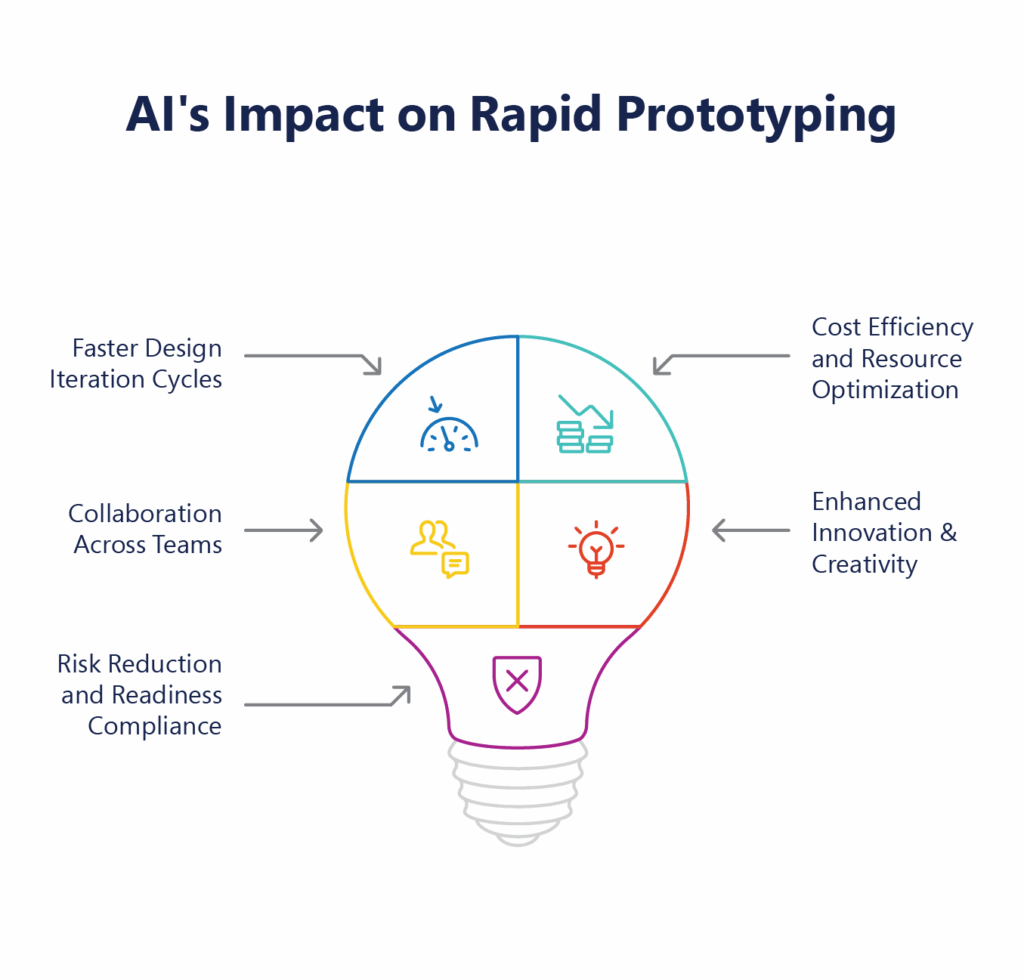
1. Faster Design Iteration Cycles
AI enables rapid simulations in prototyping, allowing teams to test hundreds of user scenarios, stress conditions, and edge cases in minutes – compressing iteration cycles that previously took weeks into hours
According to McKinsey, generative AI can reduce development time by 30–50%, especially during the design and testing stages.
2. Cost Efficiency and Resource Optimization .
AI helps cut prototyping costs by:
- Reducing reliance on expensive physical models
- Identifying design flaws early
- Streamlining workflows to avoid rework
By predicting failures in the design stage, AI reduces the likelihood of post-launch issues. It also optimizes material usage through topology optimization—removing unnecessary material without compromising structural integrity.
For enterprises, this translates to measurable ROI: AI reduces both time and cost in prototyping by eliminating redundant design cycles, minimizing late-stage rework, and optimizing resource allocation across development teams.
3. Improved Collaboration Across Teams
AI prototype generators improve workflows by automating handoffs between design, development, and testing teams – generating documentation, flagging inconsistencies, and maintaining version history automatically.
AI tools support seamless cross-functional collaboration by providing real-time updates, shared simulation environments, and automated documentation.
- Designers, engineers, and stakeholders can work on the same AI-generated model and evaluate multiple iterations without starting from scratch.
- AI-based platforms offer cloud collaboration, enabling distributed teams to contribute efficiently.
According to IDC, companies that implement collaborative AI-driven tools can improve team productivity by up to 25% due to better alignment across departments.
4. Enhanced Innovation and Creativity
AI democratizes innovation by giving designers access to a wide range of intelligent tools that augment creative thinking. Through pattern recognition, customer behavior analysis, and visual data interpretation, AI can suggest non-obvious solutions.
- AI can scan millions of design options and rank them based on performance criteria (like stress, weight, cost).
- It also facilitates “what-if” exploration: designers can input various constraints or objectives and let AI propose designs.
Considering a scenario where a product team uses AI to test hundreds of chassis designs for a consumer drone, filtering options for optimal durability and weight in just hours—an impossible task manually.
| Action | Impact on MTTR | Impact on MTBF | Impact on Availability |
|---|---|---|---|
| Reduce MTTR | Decreases | Increases slightly | Increases significantly |
| Increase MTBF | Increases | Increases significantly | Increases moderately |
| Action | Impact on MTTR | Impact on MTBF | Impact on Availability |
|---|---|---|---|
| Reduce MTTR | Decreases | Increases slightly | Increases significantly |
| Increase MTBF | Increases | Increases significantly | Increases moderately |
5. Risk Reduction and Compliance Readiness
AI tools can simulate edge cases and stress-test products in virtual environments, helping teams:
- Detect compliance violations early (e.g., accessibility, safety, data privacy)
- Address potential security flaws before launching a beta
According to FT’s piece on AI in R&D cites up to 40% reduction in time to market through testing and simulation—which often include compliance and stress analysis
6. Accelerated Design Thinking and Innovation Cycles
AI is reshaping how enterprises apply design thinking methodology, particularly in the prototyping phase where concepts are turned into testable artifacts. Rather than building one prototype, testing it, learning, and manually rebuilding, AI enables parallel prototyping that dramatically shortens iteration cycles.
- AI generates multiple prototype variants simultaneously, allowing teams to test competing concepts in parallel rather than sequentially.
- Automated user simulations replace manual usability testing, feeding results back into the next iteration in real time.
- Teams practicing design thinking can complete 3-5 prototype-test-learn cycles in the time it previously took to complete one.
- AI-driven feedback loops accelerate the path from ideation to validated concept, reducing the risk of investing in the wrong direction.
Looking for a Trusted AI Prototyping Partner? Everforth Quinnox’s AI & Data Services help enterprises go from concept to validated prototype in days. From advisory to deployment, we cover the full AI prototyping lifecycle.
Top Use Cases of AI in Rapid Prototyping
AI-powered rapid prototyping is transforming how industries design and test products—faster, smarter, and more efficiently. From banking to energy, AI enables quick iterations, personalized experiences, and data-driven innovation. Here’s how different sectors are leveraging it to accelerate product development:
BFSI
In the BFSI sector, AI-driven rapid prototyping is revolutionizing digital product development. Financial institutions are leveraging AI to swiftly prototype user interfaces for mobile banking, insurance platforms, and investment dashboards tailored to diverse customer segments.
For instance,
- AI can analyze transaction histories and behavioral data to generate personalized financial advisory dashboards or credit scoring interfaces.
- Additionally, banks are utilizing AI to prototype intelligent virtual assistants and chatbots capable of handling complex customer queries with natural language understanding.
According to McKinsey, a regional bank implemented generative AI tools and observed a 40% increase in developer productivity, significantly accelerating time-to-market for new developments.
See how Everforth Quinnox helped a leading bank achieve 40% faster delivery with Agentic AI-powered development
Manufacturing
Manufacturers harness AI to expedite the design and testing of components, systems, and machinery. Generative design algorithms powered by AI enable engineers to produce multiple optimized versions of a part, balancing factors like strength, weight, and material usage. These designs can be rapidly prototyped via 3D printing or digital simulations, reducing development cycles.
Generative AI in manufacturing prototyping goes beyond visual design, as well. It enables engineers to simulate material stress, thermal performance, and assembly workflows digitally, reducing the need for expensive physical prototypes.
For example, Siemens’ Digital Twin technology has been shown to reduce material consumption in the design phase by up to 50%. Additionally, General Motors partnered with Autodesk to use generative AI in designing lighter, stronger car parts, resulting in a seat bracket that is 40% lighter and 20% stronger than previous designs.
Retail
In the retail sector, AI-enabled rapid prototyping is transforming customer experiences by enabling faster, more personalized interactions. Retailers use AI to generate and test UI/UX designs for e-commerce platforms, checkout systems, and personalized recommendation engines based on customer personas, behavior patterns, and purchase history.
Enterprise retailers are increasingly seeking partners who can deliver working AI prototypes in 2-4 weeks, followed by 90-day pilot programs to validate ROI before full-scale rollout. This fast-prototyping-to-pilot approach lets retail teams test AI-powered features – from personalized recommendation engines to computer vision-based inventory management – with real customers before committing to enterprise-wide deployment.
The key to success is combining rapid prototyping speed with enterprise-grade testing and user validation, ensuring that what works in the prototype environment translates to production performance.
Explore how Everforth Quinnox helped a leading rural lifestyle retailer achieve 70% faster fulfillment through cloud-first integration
Environment & Energy
The environment and energy industries are leveraging AI to prototype solutions for sustainability, monitoring, and smart infrastructure. AI-based rapid prototyping supports the development of emission tracking applications, pollution heatmaps, and climate-resilient urban planning dashboards.
For example, AI models trained on satellite and sensor data can help prototype digital twins of ecosystems or industrial sites to visualize carbon footprints. In renewable energy, prototypes for smart grid control systems can simulate real-time load balancing and fault detection before physical deployment.
According to the World Economic Forum, AI offers the means to accelerate progress toward halving global emissions by 2030, highlighting its potential in driving sustainability initiatives.
How Enterprises Use AI for Rapid Prototyping: A Step-by-Step Process
The enterprise AI prototyping process differs significantly from individual designer workflows. Here’s how organizations are structuring their AI prototyping engagements:
Step 1: Discovery & AI Readiness Assessment
Before prototyping begins, teams assess which business problems are best suited for AI-driven solutions. This involves evaluating data readiness, identifying high-impact use cases, and defining success metrics. An AI advisory partner can help prioritize use cases based on business value and technical feasibility.
Step 2: Rapid Concept Development
Using AI prototyping platforms with ready-to-use infrastructure – including pre-trained models, data pipelines, and simulation environments – teams generate initial prototypes from requirements in days rather than weeks. AI generates multiple variants for stakeholder evaluation.
Step 3: AI-Powered Simulation & Testing
AI runs automated simulations: stress-testing user flows, identifying performance bottlenecks, validating compliance requirements, and generating synthetic data for edge-case testing. This replaces weeks of manual QA.
Step 4: Iterative Refinement with Real Data
Prototypes are refined using actual business data – customer behavior patterns, transaction histories, operational metrics. AI accelerates each iteration cycle, enabling 3-5 refinement loops in the time a traditional process would complete one.
Step 5: Stakeholder Validation & Pilot Deployment
What to Look for When Selecting an AI Innovation Lab for Rapid Prototyping
Not all AI prototyping approaches are equal. Enterprise teams evaluating AI prototyping services or innovation labs should consider:
Industry Expertise: Does the provider have deep domain knowledge in your sector? AI prototyping for banking compliance differs fundamentally from retail personalization or manufacturing simulation.
Infrastructure Readiness: Look for providers with pre-built AI infrastructure – GPU compute, model registries, data pipelines, and testing environments – so teams don’t waste weeks on environment setup.
End-to-End Capability: The best partners cover the entire lifecycle: from AI advisory and readiness assessment through prototyping, build, deployment, and ongoing management.
Governance & Compliance: Especially in regulated industries like BFSI and healthcare, your AI prototyping partner must embed governance guardrails – explainability, bias testing, audit trails – from the prototype stage, not as an afterthought.
Speed to POC: Evaluate providers on their ability to deliver a proof of concept within 2-4 weeks. Extended timelines often indicate infrastructure gaps or capability limitations.
Scalability Path: A prototype is only valuable if it can transition to production. Choose partners who architect prototypes with production scalability in mind from day one.
Challenges Companies Face with AI Prototyping
Despite its transformative promise, AI-powered rapid prototyping isn’t without pitfalls. These challenges need to be understood and mitigated to fully harness the benefits:
Data Quality and Bias:
AI models are only as good as the data they’re trained on. Inaccurate, incomplete, or non-representative datasets can result in flawed outputs, poor design suggestions, or even discriminatory features in user-facing prototypes.
To Do: Ensure diverse, clean, and domain-specific datasets. Perform bias audits during model training.
Lack of Explainability (The "Black Box" Problem)
AI-generated designs or code can sometimes be opaque. If an AI proposes a design variation, teams may struggle to understand why it made that decision—or how to reverse-engineer it if something breaks. Lack of explainability is especially problematic in regulated industries like healthcare or finance, where transparency is a legal requirement.
To Do: Use Explainable AI (XAI) frameworks and keep human designers in the loop for validation.
Overdependence on AI Tools
While AI enhances speed and efficiency, too much reliance can lead to diminished human creativity and reduced problem-solving capabilities. AI is a co-pilot, not a replacement. It should enhance—not replace—human judgment and imagination.
To Do: Embed checkpoints where human teams evaluate and potentially override AI-generated content.
Integration with Existing Systems
AI-generated outputs may not always align with an organization’s current tech infrastructure, requiring additional development of work, middleware, or data transformation layers. According to BCG Research, 74% of organizations face integration complexity as a barrier to AI adoption.
To Do: Prototype in AI environments that are compatible with existing stacks, or use APIs and middleware to bridge gaps.
Security and IP Concerns
Using cloud-based or third-party generative platforms poses risks related to intellectual property leakage, unauthorized access, and unclear ownership of AI-generated designs. IBM reports that 60% of organizations cite data security as their biggest concern when using AI.
To Do: Use enterprise-grade, on-prem or secured AI platforms. Clarify licensing and IP ownership terms with vendors.
Prototype-to-Production Gap
One of the most common challenges is the gap between a successful prototype and a scalable production deployment. AI prototypes built in isolated environments may not account for production-grade performance requirements, data volumes, or integration complexity. According to Gartner, only 54% of AI prototypes successfully transition to production – often because scalability, monitoring, and operational concerns weren’t addressed during the prototyping phase.”
To Do: Partner with AI service providers who architect prototypes with production deployment in mind from the start, including infrastructure scalability, monitoring, and CI/CD pipelines.
Ready to move from prototype to proof of concept?
Download our step-by-step AI PoC Roadmap — a practical framework to validate feasibility, minimize risk, and build stakeholder buy-in before scaling.
Best Practices for Mitigating Challenges in AI Prototyping
utomated AI-powered testing is critical for validating prototypes at speed. Everforth Quinnox’s software testing solutions enable teams to run comprehensive test suites across web, mobile, and API layers, ensuring prototype quality before stakeholder review.
Here are some actionable practices:

Wrap Up
Whether you’re building intelligent dashboards for banking, AI-powered recommendation engines for retail, or digital twin prototypes for manufacturing – success hinges on choosing a trusted AI prototyping partner with the infrastructure, industry expertise, and end-to-end capability to take your idea from concept to production.
And that’s exactly where Everforth AI (EAI) Studio steps in enabling teams to go from concept to prototype in days—not weeks—unlocking real business value through accelerated innovation. The future of prototyping is here—and it’s AI-first.
So, Ready to accelerate your AI vision? Connect with our AI experts today and let’s make it happen.
FAQ’s Related to AI-Powered Rapid Prototyping
AI-powered rapid prototyping uses artificial intelligence to automate and enhance the design, testing, and iteration of product concepts—enabling faster, smarter development cycles.
AI reduces manual effort by automating design suggestions, running simulations, analyzing user data, and generating multiple iterations in real time—cutting prototyping time by up to 50%.
Faster iteration, reduced development costs, improved collaboration, increased personalization, and better risk mitigation—powered by data and intelligent automation.
Yes. Industries like BFSI, retail, manufacturing, and energy are already using AI to prototype apps, dashboards, smart infrastructure, and digital products with great speed and precision.
Absolutely. While AI handles speed and scale, human judgment ensures creativity, ethical alignment, and final validation—making it a powerful collaboration, not a replacement.
EAI Studio helps businesses fast-track innovation by turning ideas into intelligent prototypes within days—co-innovating with teams to reduce time-to-market and unlock measurable value.
AI prototype generators help design projects by automating layout creation, generating multiple design variants from a single brief, simulating user interactions, and providing data-driven feedback on design effectiveness. This allows project teams to evaluate more options in less time and make evidence-based design decisions rather than relying on intuition.
Enterprise AI prototyping requires GPU compute for model training, pre-configured model serving environments, automated data pipelines for feeding business data into prototypes, version control for model and design artifacts, and governance layers for compliance. Purpose-built platforms like Everforth AI EAI Studio provide this infrastructure out of the box, eliminating weeks of environment setup.
Manual prototyping is time-intensive, expensive, and limited in the number of variations that can be explored. AI prototype generators automate design creation, run simulations at scale, and enable data-driven iteration at a fraction of the time and cost. For enterprises, the advantages compound: faster stakeholder buy-in, earlier risk detection, and significantly lower cost-per-iteration.
Financial services (mobile banking, fraud detection, compliance), retail (e-commerce personalization, virtual try-on, checkout optimization), manufacturing (generative design, digital twins, material simulation), and energy (smart grid prototyping, emission tracking, renewable optimization) are the primary industries leveraging AI prototyping at scale.
With the right infrastructure and AI prototyping partner, enterprises can go from initial concept to a functional, tested prototype in 2-4 weeks. Individual features or UI components can be prototyped in hours. The speed depends on data readiness, complexity of the use case, and whether pre-built AI infrastructure is available.