Accelerate IT operations with AI-driven Automation
Automation in IT operations enable agility, resilience, and operational excellence, paving the way for organizations to adapt swiftly to changing environments, deliver superior services, and achieve sustainable success in today's dynamic digital landscape.
Driving Innovation with Next-gen Application Management
Next-generation application management fueled by AIOps is revolutionizing how organizations monitor performance, modernize applications, and manage the entire application lifecycle.
AI-powered Analytics: Transforming Data into Actionable Insights
AIOps and analytics foster a culture of continuous improvement by providing organizations with actionable intelligence to optimize workflows, enhance service quality, and align IT operations with business goals.
Hey AI Leaders, AI is Transforming Businesses. But Will It Deliver for Yours?
AI is everywhere. You hear about it transforming industries, automating tasks, and driving billion-dollar efficiencies. But let’s be real—AI is not magic. Implementing AI in your business is not just about plugging in a smart model and expecting miracles. It takes careful planning, testing, and validation to see if AI can truly deliver value for your business.
And this is where the real problem is: Many AI projects fail. According to a RAND research, 80% of AI projects never make it past the prototype stage. Why is that? Because companies dive into full-scale AI implementations without testing feasibility, business impact, or whether AI will actually work in their environment. This is where an AI Proof of Concept (PoC) comes in.
Artificial intelligence PoC acts as your insurance policy against wasted AI investments which allows you to validate your AI idea, test feasibility, and measure real business impact—before committing to full-scale deployment.
Ready to run your AI PoC the right way? Download the AI PoC Roadmap, a step-by-step strategic framework to validate feasibility, manage risk, and build stakeholder confidence before scaling. Get the Free Roadmap →
In this guide, we break down both Traditional AI PoCs and Generative AI PoCs – what they are, how they differ, when to use, and how enterprises should design, evaluate, and scale them. From predictive models and optimization engines to LLM-powered copilots and knowledge assistants, this guide covers the full AI PoC lifecycle.
What Is an AI Proof of Concept (PoC)?
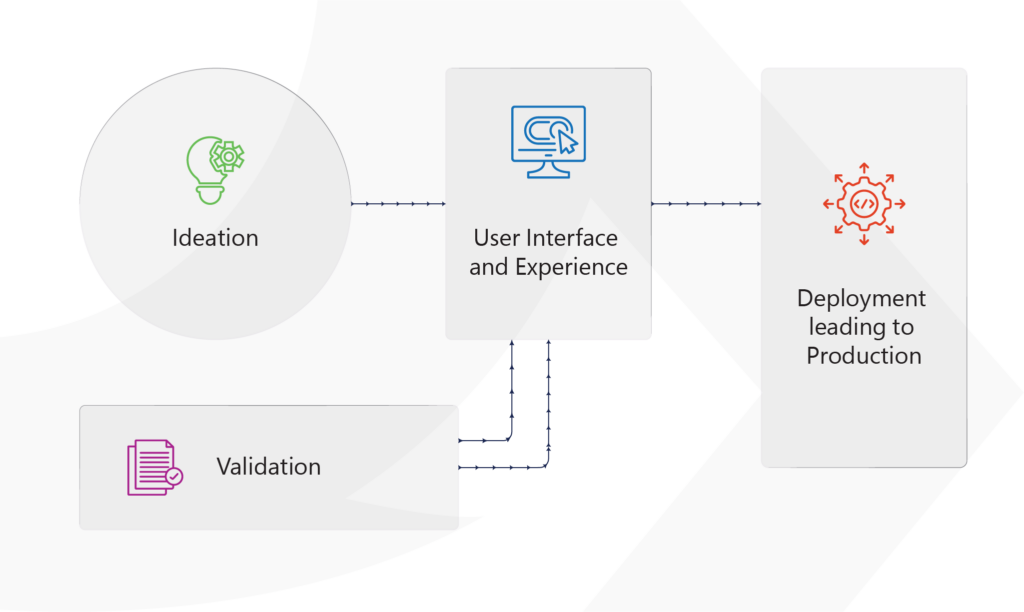
An AI Proof of Concept (PoC) is a small-scale, experimental project that helps businesses validate whether an AI solution can achieve specific objectives before full-scale implementation.
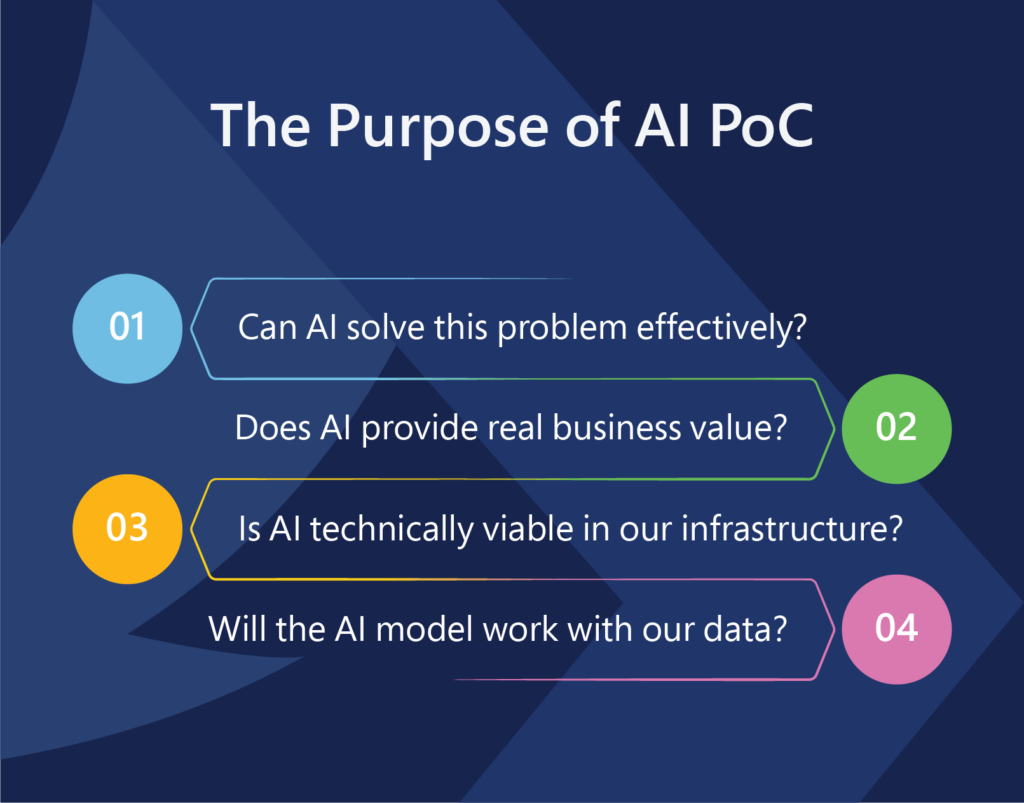
If you don’t have answers to these questions, then you need a PoC artificial intelligence. AI PoC helps organizations gather evidence on the feasibility and impact of AI before making larger investments.
Why AI PoCs Matter?
- AI is powerful, but not all AI projects succeed. The best way to mitigate failure risk is to test feasibility before full-scale deployment.
- AI PoCs helps justify AI investment to stakeholders. Instead of spending millions on untested AI solutions, businesses can validate AI impact in a controlled environment.
- Testing generative AI proof of concept solutions allows companies to explore cutting-edge AI models, ensuring they align with business needs before large-scale investment.
How an AI PoC is different from Prototypes and MVPs
An AI PoC and an AI Prototype are often confused, but all of the three serve different purposes.
|
|
Once this distinction is clear, the next and often overlooked question emerges: What type of AI PoC does your business actually need?
This is where the distinction between Traditional AI PoCs and Generative AI PoCs becomes critical.
| Aspect | Traditional AI PoC | Generative AI PoC |
|---|---|---|
| Goal | Predict outcomes based on historical patterns. Common examples include predicting customer churn, detecting fraud, or classifying emails | Generate new content such as text, images, code, or conversations. It mimics human creativity and language generation, e.g., writing emails or summarizing reports. |
| Data Type | Uses structured data, typically found in formats like CSV files, relational databases, or labeled datasets. Cleanliness, labeling, and statistical balance are critical | Uses unstructured or semi-structured data like text documents, chat transcripts, emails, or audio. Quality and contextual richness matter more than strict structure. |
| Tools | Built using traditional ML/AI frameworks like Scikit-learn, TensorFlow, or XGBoost. Requires model training, feature engineering, and labeled data. | Leverages foundation models like GPT-4, Claude, or open-source LLMs. Uses tools for orchestration. |
| Time to Build | Typically takes weeks to months, due to the need for data preparation, model selection, training, and validation pipelines. | Can be built in days to weeks by using API-based LLMs. No model training is necessary for most use cases, so prototyping is significantly faster. |
| Evaluation | Focuses on quantitative performance metrics such as accuracy, precision, recall, F1-score, and RMSE. The goal is statistical correctness. | Requires qualitative and user-centric metrics such as coherence, fluency, tone, factuality, or usability. Human feedback is often crucial for evaluation. |
The difference matters, because it impacts your architecture, evaluation methods, and stakeholder expectations.
Generative AI Proof of Concept: What Makes It Different?
Running a Generative AI PoC is fundamentally different from running a traditional machine learning PoC. And not just in the tools involved, but in how you design the experiment, what you measure, and what “good” looks like at the end.
Architecture of a Generative AI PoC
A typical GenAI PoC is built around three layers:
Foundation model layer – You will almost never train a generative model from scratch in a PoC. Instead, you access a pre-trained foundation model (GPT-4, Claude, Gemini, Mistral, or an open-source LLM like LLaMA) via API or a managed cloud service. The choice of model depends on your use case: GPT-4 or Claude for long-context reasoning and document analysis, Mistral for cost-sensitive on-premise deployments, specialised models for code generation or domain-specific tasks.
Orchestration layer – This is what makes the PoC actually do something useful. You wire the foundation model to your business context using frameworks like LangChain or LlamaIndex, retrieval-augmented generation (RAG) pipelines to ground the model in your own data, prompt engineering and prompt templates, and output parsers that structure the model’s responses for downstream use.
Evaluation layer — Because generative outputs are open-ended, you cannot evaluate them with a single accuracy number. Your evaluation framework needs to cover: factual accuracy against a reference set, relevance to the prompt, tone and format consistency, hallucination rate (how often the model invents facts), latency under realistic load, and — critically — end-user acceptance. Human evaluation is not optional in a GenAI PoC; it is part of the methodology.
Typical Generative AI PoC Timeline
| Phase | What happens | Duration |
|---|---|---|
| Scoping & data prep | Define use case, gather sample documents or data, set evaluation criteria | 3–5 days |
| Prompt engineering & RAG setup | Build retrieval pipeline, iterate on prompts, connect to model API | 1–2 weeks |
| Evaluation & iteration | Run structured tests, gather user feedback, refine prompts and retrieval | 1–2 weeks |
| PoC readout | Document findings, present results, recommend next steps | 2–3 days |
The phases and durations above reflect industry-standard timelines for a self-managed GenAI PoC. With EAI Studio’s pre-built accelerators, 70+ mapped AI use cases, and dedicated AI squads, Quinnox can compress the journey from AI idea to working prototype significantly faster. [See how EAI Studio accelerates your AI PoC → quinnox.com/qai–quinnox-ai-studio/]
Prompt engineering treated as an afterthought
Prompt engineering treated as an afterthought
The quality of a GenAI system lives in the quality of its prompts and retrieval design. Teams that spend 80% of their time on the model layer and 20% on prompting consistently produce worse results than teams that invert that ratio.
No evaluation framework before build
If you do not decide upfront how you will score outputs — and who will score them — you will end the PoC with impressive demos and no defensible evidence that the system works.
Data not representative of production
Running a GenAI PoC on 50 clean, hand-selected documents and then deploying against 500,000 messy, inconsistent ones is the fastest way to a failed rollout. Use a sample that reflects the real distribution of your data from day one.
No evaluation framework before build
If you do not decide upfront how you will score outputs — and who will score them — you will end the PoC with impressive demos and no defensible evidence that the system works.
Data not representative of production
Running a GenAI PoC on 50 clean, hand-selected documents and then deploying against 500,000 messy, inconsistent ones is the fastest way to a failed rollout. Use a sample that reflects the real distribution of your data from day one.
A Third Category is Emerging: Agentic AI PoC
Traditional and Generative AI PoCs test whether a model can produce a correct output given a defined input. Agentic AI PoCs test something more complex: whether an autonomous AI agent can plan a sequence of actions, use tools, adapt to unexpected results mid-task, and complete a multi-step business process without human intervention at each step.
Agentic PoCs take longer (typically 8–14 weeks), require a different evaluation approach — you are testing reliability across chains of decisions, not accuracy on individual outputs — and carry higher integration complexity because agents interact with external systems, APIs, and data sources in real time.
When Should You Consider an AI PoC (And When Is It a Waste of Time)?
When Should You Consider an AI PoC (And When Is It a Waste of Time)?
- When AI’s Feasibility Is Uncertain: If your business problem involves large datasets, predictive analytics, or real-time decision-making, but you’re unsure whether AI is the right solution, a PoC can validate AI’s effectiveness before large-scale deployment.
- When No Proven AI Solution Exists in Your Industry: Some industries have mature AI applications, while others (like small-scale manufacturing or logistics) are still exploring AI. If your competitors haven’t deployed AI yet, a PoC helps you experiment and lead the innovation curve.
- When Leadership or Investors Need Proof Before Committing Funds: Executives and investors demand concrete ROI projections before approving AI investments. A PoC delivers measurable evidence of cost savings, efficiency gains, or revenue impact.
- When You Want to Experiment with AI Before Large-Scale Investment: AI is constantly evolving, and businesses may want to explore multiple AI models or vendors before committing. A PoC allows controlled experimentation with different AI solutions.
- When Your Industry Requires AI to Comply with Regulations: In sectors like finance, healthcare, and legal tech, AI must meet compliance and security regulations (GDPR, HIPAA, etc.). A PoC allows businesses to assess AI’s regulatory compliance before a full rollout.
Building AI isn't just about developing smart systems—it's about ensuring those systems are secure, scalable, and built to deliver measurable business value. Without security and strategy, even the smartest AI can become a costly risk.
- Krishna Kumar, VP, Data & AI, Quinnox
When an AI PoC Is a Waste of Time
- If the AI Solution Is Already Proven in Your Industry:
If competitors are already using well-established AI applications, conducting a PoC may be redundant. Instead, businesses should focus on deploying or customizing AI solutions directly. - If You Don’t Have Enough Data to Train an AI Model:
AI models require high-quality, structured data. If your data is incomplete, unstructured, or insufficient, a PoC will yield unreliable results. The priority should be data collection and preparation first. - If Your Organization Lacks AI Talent or Infrastructure:
Building AI requires skilled data scientists, machine learning engineers, and robust IT infrastructure. If you lack these, consider outsourcing AI development or using pre-trained AI models instead of running a PoC. - If a Traditional Solution Can Solve the Problem Efficiently:
AI isn’t always the best solution. If automation, business intelligence tools, or rule-based systems can handle the task more effectively, an AI PoC is unnecessary.
Key Use cases of AI PoC Across Industries
Artificial Intelligence (AI) is transforming businesses by enhancing efficiency, automating processes, and enabling data-driven decision-making. Organizations across industries are leveraging AI Proof of Concepts (PoC) to validate new technologies before full-scale deployment.
Here are 5 real world AI use cases of implementing AI tools with the help of a PoC:
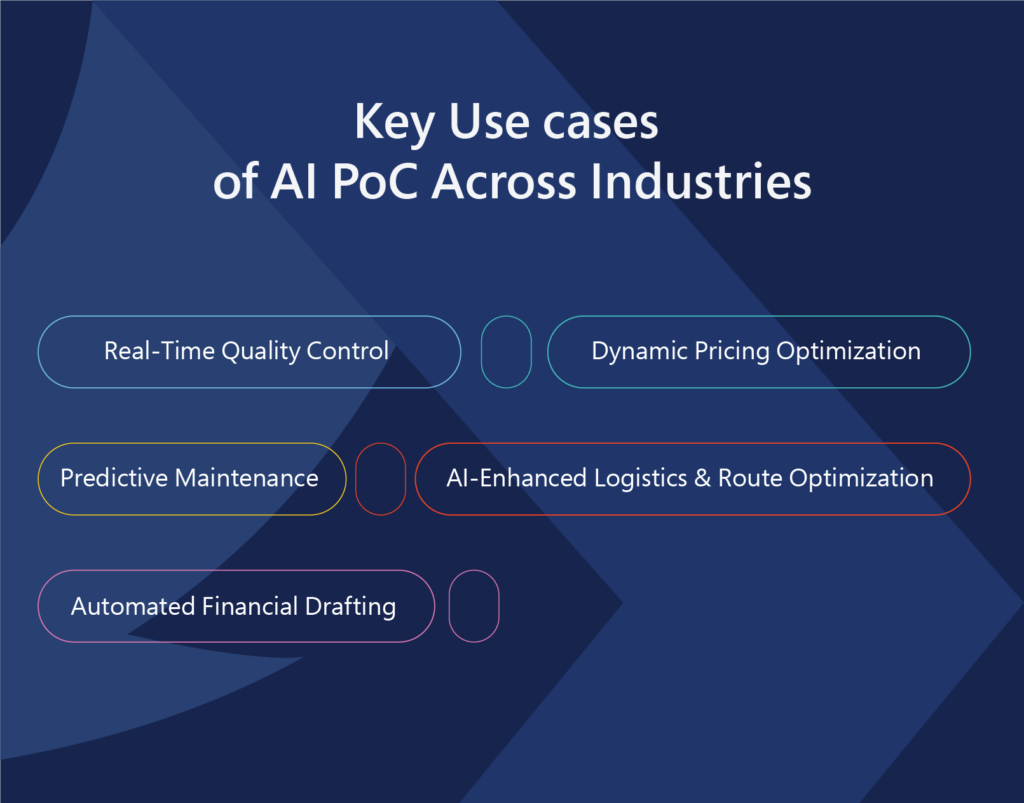
- Real-Time Quality Control – AI-powered image recognition detects defects in manufacturing and retail products, ensuring quality standards are met and reducing human inspection errors.
- Dynamic Pricing Optimization – AI-driven pricing models adjust rates in real-time based on demand, competitor activity, and seasonal trends, maximizing profitability for retailers and service providers.
- Predictive Maintenance – AI sensors track equipment performance, detect anomalies, and predict failures, enabling proactive maintenance to reduce downtime and repair costs.
- AI-Enhanced Logistics & Route Optimization – AI-powered route planning factors in traffic, weather, and delivery priorities to optimize logistics, reducing delays and operational costs.
- Automated Financial Drafting – AI generates financial reports, contract drafts, and regulatory documents by analyzing structured and unstructured financial data, improving accuracy and efficiency.
The Biggest Business Benefits that AI PoC Offers
Jumping into AI without validation is a high-risk move—misaligned AI projects can drain resources, fail to meet expectations, and even damage a company’s reputation. An AI Proof of Concept (PoC) acts as a safety net, allowing businesses to test feasibility, measure impact, and refine AI models before committing to full-scale deployment.
1. Early Risk Mitigation:
- 80% of AI projects fail to meet business objectives due to poor planning and misalignment.
- A PoC uncovers technical limitations, data inconsistencies, and business misalignments early on, preventing expensive AI failures at later stages.
2.Smarter Resource Allocation
- A PoC ensures that AI investments—budget, time, and talent—are directed toward proven solutions.
- Instead of blindly committing to AI development, businesses can validate ROI first, ensuring resources aren’t wasted on ineffective models.
3.Defined Success Metrics: Clear KPIs for AI Performance
- Many AI projects fail because businesses don’t define clear success metrics.
- An AI PoC sets measurable KPIs—accuracy, efficiency, cost reduction—ensuring AI aligns with business goals.
4.Faster AI Experimentation & Iteration
- AI requires continuous testing and refinement. A PoC allows businesses to experiment with different models, data inputs, and configurations in a controlled environment before scaling.
- Faster iteration cycles mean businesses can quickly refine AI models and optimize outcomes.
5.Innovation Without Full Commitment
- A PoC allows businesses to explore cutting-edge AI technologies without committing to full-scale implementation.
- This low-risk environment fosters AI innovation while ensuring that only the most promising solutions move forward.
You know why an AI PoC matters. The harder question is how to build one that actually produces a decision rather than just a demo. Our step-by-step guide, “How to Build AI Proof of Concept (PoC): A Step-by-Step Strategic Roadmap” gives you a structured, actionable framework covering everything from scoping and data readiness to success criteria and scaling, which is built specifically for leaders who need to move from “we should test this” to a validated result their organisation can act on.
1. Early Risk Mitigation:
- Many AI projects fail because businesses don’t define clear success metrics.
- An AI PoC sets measurable KPIs—accuracy, efficiency, cost reduction—ensuring AI aligns with business goals.
4. Faster AI Experimentation & Iteration
- AI requires continuous testing and refinement. A PoC allows businesses to experiment with different models, data inputs, and configurations in a controlled environment before scaling.
- Faster iteration cycles mean businesses can quickly refine AI models and optimize outcomes.
5. Innovation Without Full Commitment
- A PoC allows businesses to explore cutting-edge AI technologies without committing to full-scale implementation.
- This low-risk environment fosters AI innovation while ensuring that only the most promising solutions move forward.

AI PoC Success Criteria: What Does "It Worked" Actually Mean?
One of the most common reasons AI PoCs fail to produce a clear go/no-go decision is that no one agreed upfront on what success looked like. By the time results are presented, different stakeholders are measuring against different expectations — and a result that would have been approved in week one gets rejected in week eight because the goalposts shifted.
Define your success criteria across three categories before the PoC begins.
Technical performance criteria
| Criterion | What to measure | Example threshold |
|---|---|---|
| Model accuracy | Precision, recall, F1-score on held-out test set | F1 above 0.82 |
| Inference speed | Time from input to output under production load | Under 800ms at p95 |
| Throughput | Requests the model can handle per second | Minimum 50 req/sec |
| Stability | Variance in output quality across different input types | Less than 5% output variance |
| Hallucination rate (GenAI only) | % of outputs containing factually incorrect statements | Below 3% on evaluation set |
| Business impact criteria | ||
|---|---|---|
| Process time reduction | Time to complete the target task before vs after AI | 40%+ reduction |
| Error rate reduction | Error frequency in AI-assisted vs manual process | 50%+ reduction |
| Cost per unit | Cost to process one transaction, claim, or document | Below £0.12 per document |
| Volume capacity | Units processed per hour with AI vs without | 3x current throughput |
| Adoption & usability criteria | ||
|---|---|---|
| User acceptance | % of end users rating AI outputs as "useful" or "very useful" | Above 70% |
| Override rate | % of AI recommendations overridden by human operators | Below 25% |
| Trust threshold | % of users who would use system without parallel manual check | Above 50% after 4 weeks |
How to Build an AI Proof of Concept?
With iAM, every application becomes a node within a larger, interconnected system. The “intelligent” part isn’t merely about using AI to automate processes but about leveraging data insights to understand, predict, and improve the entire ecosystem’s functionality.
Consider the practical applications:
Step 1: Define the Business Problem & Objectives
Before developing an AI PoC, it is essential to clearly define the problem statement and expected outcomes. This step involves:
- Identifying the challenge – What business problem will AI solve? (e.g., improving customer engagement, optimizing logistics, detecting fraud).
- Defining PoC goals – What will the PoC achieve? (e.g., improve accuracy by 20%, reduce processing time by 50%).
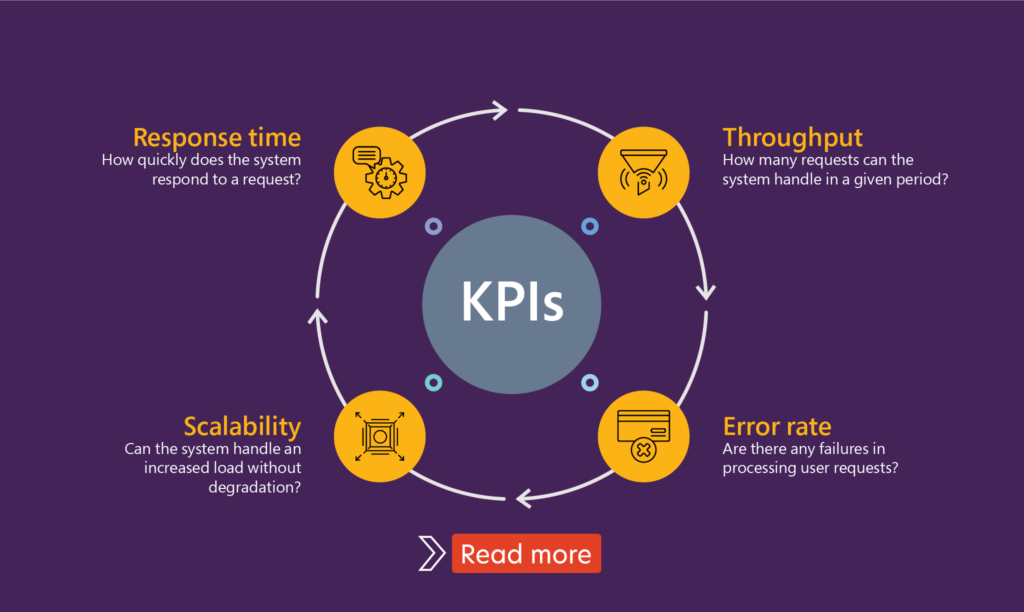
- Setting measurable KPIs – Success metrics should be quantifiable (e.g., response time, cost reduction, accuracy, efficiency gains).
- Understanding constraints – What are the available data sources, budget, infrastructure, and timeline?
Align these objectives with your broader business strategy and ROI expectations. Consider how the AI PoC can contribute to long-term value, whether through cost savings, revenue growth, or improved operational efficiency.
AI PoC Scoping Checklist
Before moving into development, every element below should have a documented answer. Teams that skip this step typically discover the missing answer mid-build, when it is far more expensive to address.
Problem definition
☐ The business problem is stated in one sentence without technical language
☐ The problem is narrow enough to test within an 8-week window
☐ The cost of the problem today (time, money, errors, missed revenue) has been estimated
☐ AI has been confirmed as the right solution — not automation, rules, or a simpler analytics approach
Data readiness
☐ Relevant data sources have been identified and listed
☐ Data access has been approved by the data owner and, where applicable, legal or compliance
☐ A sample of the data has been reviewed — missing values, inconsistencies, and biases noted
☐ Volume of labelled data available for training (if supervised learning) has been confirmed
☐ Data privacy and retention requirements are understood
Success criteria
☐ Primary KPI defined with a target threshold (e.g. “precision above 85%”, “processing time below 3 minutes”)
☐ Secondary KPIs defined (e.g. latency, cost per inference, user acceptance rate)
☐ Minimum acceptable result to justify proceeding to a full pilot agreed in writing by all stakeholders
☐ The result that would lead to a “stop” decision is also defined
Team, resources & governance
☐ PoC lead with decision-making authority has been named
☐ Data science / ML engineering resource confirmed and allocated
☐ Domain expert available for at least 4 hours per week throughout the PoC
☐ PoC end date fixed and agreed. Mid-point review and stakeholder readout dates booked.
☐ Budget for cloud compute, model API costs, and tooling approved
Step 2: Identify the Right AI Use Case
Selecting the right use case is crucial to ensure your AI PoC delivers meaningful results. Evaluate which AI solutions align best with your defined business problem. For instance, customer support challenges can be addressed with chatbots, while sales forecasting may require predictive analytics.
Consider potential ROI when identifying use cases. Solutions that improve customer retention, automate manual processes, or reduce operational costs often provide significant returns.
Evaluate feasibility by assessing:
- Data Availability: Does your organization have sufficient, quality data for model training?
- Workforce Skills: Does your team have expertise in data science and AI development?
- Infrastructure Readiness: Are suitable resources available for computation, storage, and deployment?
Step 3: Choose the Right AI Model (Buy, Build, or Use Pre-Trained Models?)
1. Pre-Trained AI Models: These models are ready to deploy for common tasks like image recognition, sentiment analysis, or anomaly detection.
- Pros: Fast implementation, cost-effective, minimal expertise required.
- Cons: Limited customization may struggle with unique use cases.
2. Fine-Tuned AI Models: Adapt pre-trained models to your specific business data by retraining select layers.
- Pros: Balanced between speed and customization; leverages existing model strengths.
- Cons: Requires domain expertise and robust data pipelines.
3. Ready-Made AI Software: These solutions are ideal for businesses seeking plug-and-play tools with minimal development effort.
- Pros: Simple deployment, low technical expertise required.
- Cons: May not fully meet custom business needs.
4. Outsourcing to AI Experts: Partnering with specialized AI vendors can accelerate development and ensure tailored solutions.
- Pros: Leverages expert knowledge, ensuring optimal results.
- Cons: Higher costs and potential dependency on third-party vendors.
How to choose: a decision framework
Use this matrix to identify your starting position. Most enterprise AI PoCs fall clearly into one quadrant.
| By Use Case Status | Strong internal AI/ML capability | Limited internal AI/ML capability |
|---|---|---|
| Use case well-defined, quality data available | Build internally using pre-trained or fine-tuned models. Fastest path when you have the talent. | Use a ready-made AI solution or outsource to an AI partner for faster time-to-result with lower execution risk. |
| Use case is novel or data is limited / unstructured | Fine-tune a foundation model or explore experimental architectures internally. Budget extra time for data work. | Partner with a specialist AI firm. Novel use case + limited internal capability is the highest-risk PoC profile. |
THREE QUESTIONS THAT CLARIFY THE DECISION QUICKLY
1. Does your team have at least one experienced ML engineer who has taken a model to production before — not just trained one in a notebook? If not, outsource or use a managed platform.
2. Can you get a representative, clean dataset approved for use within the PoC timeline? If not, either delay the PoC until data is ready or use a foundation model that requires less training data.
3. Is the differentiation in your model — or in your data and process? If the latter, a pre-trained or ready-made model applied to your context is almost always faster and lower-risk than a custom build.
Step 4: Collect & Prepare Data for AI PoC
AI models rely on high-quality data for training and validation. In this step, the focus is on:
- Identifying relevant data sources – Structured (CRM, databases) and unstructured (emails, chat logs, images) data.
- Data cleansing & preprocessing – Handling missing values, removing duplicates, and ensuring consistency.
- Feature selection & engineering – Identifying key variables that influence model performance.
- Addressing data privacy & security – Ensuring compliance with GDPR, HIPAA, or other regulations.
Step 5: Develop & Train the AI Model for PoC Testing
Based on your chosen AI model type, follow these development strategies:
- Custom Model Development: Build models using frameworks like PyTorch, TensorFlow, or Scikit-Learn. Custom development offers the highest flexibility for complex use cases.
- Fine-Tuning an AI Model: Enhance pre-trained models using transfer learning. This method is effective for domain-specific applications like medical diagnosis or fraud detection.
- Pre-Trained Model Integration: For simpler AI PoCs, integrate established models into your business environment using APIs.
Throughout development, ensure continuous evaluation of model performance using metrics such as precision, recall, and F1-score.
Step 6: Run AI Experiments & Evaluate Performance
Rigorous testing is essential to validate your PoC’s effectiveness. Simulate real-world conditions by introducing variables such as peak traffic, unexpected data inputs, or complex decision scenarios.
Evaluate model performance across critical metrics:
- Accuracy: Measures prediction correctness.
- Speed: Assesses response time for real-time applications.
- Cost Efficiency: Estimates the financial impact of your solution.
- Scalability: Tests model performance under increased data loads.
Utilize A/B testing and gather end-user feedback to identify areas for improvement before full deployment.
Step 7: Analyze AI PoC Results & Measure Success
Once testing is complete, compare outcomes against your initial KPIs. Identify performance gaps and improvement areas.
Conduct a thorough evaluation of:
- Bottlenecks: Determine if data quality, model architecture, or computational limitations affect performance.
- Failure Points: Understand why specific scenarios failed to deliver expected results.
- Stress Testing: Ensure the model maintains stability under peak conditions.
Step 8: Decide on the Next Step - 4 Real Possibilities!
Based on PoC results, determine the appropriate course of action:
- Full-Scale Deployment: Proceed if KPIs are met and ROI is clear.
- Model Refinement: Enhance data quality, model architecture, or performance tuning.
- Alternative AI Approach: Consider shifting to a different AI method if initial outcomes are insufficient.
- Project Cancellation: If ROI is unachievable or risks are significant, abandon the project and reallocate resources.
Step 9: Transitioning AI PoC to Full Deployment
- Getting a positive PoC result is not the finish line. It is just the starting point for taking your validated solution to production. Create a roadmap that outlines:
Phase 1: Hardening
- Security and data governance — Move beyond the relaxed PoC environment. Implement role-based access controls, encryption at rest and in transit, and formal compliance checks against GDPR, HIPAA, or sector-specific frameworks.
- Model documentation and bias audit — Record training data sources, known limitations, and performance across different data distributions. This protects against silent model failures in edge cases your PoC never tested.
- Failure mode mapping — Define what happens when the model is wrong. Set confidence thresholds below which the system falls back to a human decision or flags for review.
Phase 2: Scaling
- Infrastructure provisioning — Size your compute for the 95th percentile of expected production traffic, not peak PoC load. Build auto-scaling policies that handle demand spikes without manual intervention.
- MLOps pipeline — Set up automated retraining triggers, model versioning for rapid rollback, and CI/CD so updates reach production without manual pushes.
- Shadow deployment testing — Run the model against real inputs in parallel with your existing system before go-live. This surfaces integration failures and edge-case behaviours that PoC testing cannot.
Phase 3: Operationalising
- Monitoring and drift detection — Track input data drift, prediction drift, and performance drift. Define the threshold at which each triggers a retraining cycle.
- Human-in-the-loop design — Define which decisions the model owns autonomously, which need human review, and which it only informs. Revisit this as the model’s track record builds.
- Change management — Assign a clear internal owner post-launch. Build a feedback channel for end users to flag bad outputs. Train affected teams on the actual tasks they will use the model for — not a one-hour demo.
- Review cadence — Schedule 30-day, 90-day, and 6-month performance reviews against the KPIs from your original PoC.
The nine steps above give you the framework. The guide gives you everything you need to put it in front of your team, your leadership, and your stakeholders. “How to Build AI Proof of Concept (PoC): A Step-by-Step Strategic Roadmap” is a portable, presentation-ready roadmap packed with practical steps, expert insights, and real success stories, designed for C-level executives, AI teams, and innovation leaders who need to make the case for a structured PoC approach before the next investment decision lands on the table.
How Long Does an AI Proof of Concept Take?
Timeline is one of the first questions stakeholders ask — and one of the most common sources of misaligned expectations. The answer depends entirely on PoC type, data readiness, and the complexity of the business problem.
| PoC type | PoC type | Primary timeline driver |
|---|---|---|
| Generative AI / LLM PoC | 3–5 weeks | Prompt engineering, RAG pipeline setup, human evaluation cycles |
| Traditional ML PoC (classification, regression) | 6–10 weeks | Data cleaning, feature engineering, model selection and training |
| Computer vision PoC | 8–12 weeks | Image labelling, model architecture selection, inference optimisation |
| Agentic AI PoC | 8–14 weeks | Agent architecture design, tool integration, multi-step reliability testing |
| Enterprise-scale PoC (multi-system integration) | 10–16 weeks | Data access, security review, stakeholder alignment, integration testing |
The durations above represent typical industry timelines and vary based on data readiness, team capability, and use case complexity. Organisations working with EAI Studio benefit from 50+ pre-built accelerators and 250+ AI and data experts, reducing time-to-prototype considerably across all PoC types. [See how EAI Studio accelerates your AI PoC → quinnox.com/qai–quinnox-ai-studio/]
What slows a PoC down most often
Data access delays. The single most common reason a PoC runs over timeline is that the data needed to train or evaluate the model takes weeks to procure, clean, or get approved. Resolving data access and governance before the PoC begins, not during it. is the highest-leverage timeline intervention available.
Scope creep. A PoC that starts as “can we predict customer churn” and becomes “can we predict churn, recommend next best action, and generate a personalised email” is no longer a PoC. It is a product. Time-boxing both the scope and the calendar is the only reliable defence against this.
Stakeholder review cycles. Build review milestones into your PoC timeline from the start — do not treat them as delays to be minimised. A two-week midpoint review is far less expensive than a six-week reorientation at the end.
Best Practices for a Successful AI Proof of Concept
The difference between a PoC that produces a clear, defensible answer and one that produces a lot of activity and an inconclusive result usually comes down to a handful of decisions made before the first line of code is written.
Start with one use case, one team, one dataset
The instinct to test multiple use cases simultaneously to “get more value” from the PoC investment consistently produces worse outcomes than a tightly scoped single-use-case experiment. A PoC is not a pilot programme. It is a controlled test of a single hypothesis. Treat it like one.
Define success criteria before you begin building
Write down, in a shared document agreed by all stakeholders, the exact numbers that would constitute a successful PoC — not “improve accuracy” but “achieve precision above 85% on the held-out test set.” If your team cannot agree on success criteria before the PoC starts, the PoC will not produce a decision at the end of it.
Time-box aggressively
Set a firm end date — typically 4–8 weeks for most PoC types — and treat it as immovable. If the PoC is not producing results within the time-box, the correct response is to analyse why and adjust the approach for the next iteration, not to extend the current one indefinitely. Unlimited PoC timelines produce unlimited spending with no forcing mechanism.
Involve domain experts from day one, not week six
Data scientists working without access to the people who understand the business problem will build technically correct models that solve the wrong problem. A domain expert’s input on which features matter, which edge cases are business-critical, and what “good output” looks like is worth more in week one than in the final review presentation.
Use production-representative data, not clean sample data
The single fastest way to invalidate a PoC result is to train and evaluate the model on carefully selected, pre-cleaned data and then deploy it against the actual messy, inconsistent, incomplete data that exists in your production systems. If your production data has a 15% missing-value rate in a key field, your PoC data should too.
Treat the PoC readout as a business presentation, not a technical debrief
The audience for a PoC conclusion is almost always a business decision-maker, not a data scientist. Structure your readout around the business question you were testing, the business metrics you observed, and a clear recommendation — not model architecture diagrams and loss curves.
Common Challenges of AI Development at the PoC Stage
Common Challenges of AI Development at the PoC Stage
AI development at the PoC stage is often complex, with several obstacles that can delay progress or compromise outcomes. Successfully navigating these challenges requires proactive planning and strategic execution. Here are some common issues organizations face during AI PoC development and ways to address them:
- Inconsistent Data Ecosystem: Data inconsistency, duplication, and outdated information often hinder AI PoCs. Instead of relying solely on historical data, ensure you establish a robust data pipeline that continuously refreshes and consolidates data from multiple sources. Leveraging data versioning tools can further streamline this process.
- Lack of Domain-Specific Knowledge: Even with strong technical expertise, AI teams may struggle to interpret business-specific nuances. Bridging this gap requires collaboration with domain experts who can guide data labeling, feature selection, and model evaluation to ensure the solution aligns with real-world needs.
Related Read: A leader’s guide to bridging AI skills gap
- Resource Optimization Challenges: AI PoCs often demand significant computing power, yet over-provisioning resources can inflate costs. To address this, implement resource-efficient frameworks like lightweight models, transfer learning, or cloud-based infrastructure with auto-scaling capabilities.
- Unclear Evaluation Frameworks: Organizations sometimes struggle to define meaningful success benchmarks during PoC evaluation. Instead of relying solely on model performance metrics, align KPIs with specific business outcomes such as improved customer retention, faster decision-making, or reduced downtime.
- Stakeholder Misalignment: Different stakeholders may have conflicting priorities for an AI PoC. To manage expectations, establish a clear communication framework that defines project goals, milestones, and success criteria upfront. Regular updates and demonstration of early wins can build confidence and alignment.
An AI PoC is more than just a technical experiment—it’s a strategic investment. At EAI Studio, we align every PoC with clear business goals to ensure meaningful outcomes.
– Krishna Kumar, VP, Data & AI, Everforth Quinnox
Real-World AI PoC Examples and Success Stories
Case Study 1
A leading global fragrance company was manually analysing incoming formulation requests from clients, a process so constrained that the team could only respond to 30-40% of incoming project briefs. Revenue was being left on the table and clients were waiting longer than competitors required. EAI Studio developed a Gen-AI-based recommendation engine using LLMs and RAG techniques on Azure, automating the formulation analysis process while keeping every output within real-time regulatory compliance boundaries. The result: a 60-70% increase in processed project briefs, with compliance maintained across all markets the company operates in.
Facing similar capacity constraints in your business? Read the full case study to see how the solution was designed and what changed after deployment.
Facing similar capacity constraints in your business? Read the full case study to see how the solution was designed and what changed after deployment.
Case Study 2
A leading UK-based financial services provider specialising in lending and savings solutions faced persistent challenges in their month-end reconciliation processes. Manual workflows were time-consuming, error-prone, and causing delays that rippled into downstream applications. EAI Studio automated the core reconciliation workflows, built a risk model, established control checks, and standardised processes across the board. The result: processing time reduced by 40%, daily batch performance improved from 24 minutes to 6 minutes, and manual intervention cut by 80%.
Facing similar inefficiencies in your financial operations? Read the full case study to see how the solution was designed and what changed after deployment.
AI PoC Use Cases by Industry: What Gets Tested and Why
The business problems that drive AI PoCs vary by industry, but the underlying logic is consistent: validate before you commit. Here is what AI PoCs typically look like across six industries where Quinnox works.
Banking & Financial Services
The problem being tested
Banks and financial services firms most commonly run AI PoCs against three types of problems: fraud detection, credit risk assessment, and document-intensive processes like KYC, loan underwriting, and reconciliation. In each case, the core PoC question is whether the model can match or exceed the accuracy of human analysts at a fraction of the time and cost, without introducing regulatory exposure.
What a well-structured PoC measures
- Model precision and recall on a held-out dataset of historical transactions or documents, benchmarked against analyst decisions on the same data
- False positive rate. In fraud detection, a model that flags too many legitimate transactions is operationally unworkable even if its recall is high
- Regulatory auditability. Can the model’s decisions be explained to a compliance team or regulator in plain language?
- Integration feasibility. Can the model connect to core banking systems within the constraints of the existing IT architecture?
Insurance
The problem being tested
Insurance AI PoCs cluster around three use cases: claims triage and routing, underwriting risk assessment, and fraud detection. The PoC question is whether the model can categorise or score incoming cases accurately enough to reduce manual workload, without misrouting claims in ways that create regulatory or customer service risk.
What a well-structured PoC measures
- Classification accuracy on a labelled historical claims dataset, with separate accuracy scores for each routing category (automated settlement, standard review, specialist escalation)
- Failure mode analysis. What does the model do when it is wrong? Over-escalation (sending simple claims to human review) is an acceptable failure mode. Under-escalation (routing complex claims to automated settlement) is not.
- Straight-through processing rate. What percentage of claims can the model handle without human intervention, and does that rate justify the investment?
- Customer journey impact. Does AI-assisted triage reduce the time between claim submission and first contact?
Retail & Consumer Goods
The problem being tested
Retail AI PoCs most commonly address demand forecasting, dynamic pricing, personalisation, and inventory optimisation. The PoC question is whether the model can make better predictions or recommendations than the current rules-based or manual approach, and whether the improvement is large enough to justify the operational change required to act on those recommendations.
What a well-structured PoC measures
- Forecast accuracy improvement over the existing forecasting method, measured on a held-out period of historical data
- Shadow mode performance. The model runs in parallel with the existing process, its recommendations are recorded but not acted on, and its predicted outcomes are compared against what actually happened.
- Decision latency. For dynamic pricing, can the model generate recommendations fast enough to respond to real-time demand signals?
- Adoption feasibility. Will the merchandising or pricing team actually use the model’s outputs, or will the recommendations be systematically overridden?
Logistics & Supply Chain
The problem being tested
Logistics AI PoCs typically address route optimisation, predictive maintenance for fleet or equipment, warehouse picking optimisation, and demand-driven inventory positioning. The PoC question is whether AI recommendations can reduce operational cost, downtime, or delay, and whether the model’s outputs can be trusted enough for operations teams to act on them in time-sensitive environments.
What a well-structured PoC measures
- Prediction accuracy on a held-out dataset. For predictive maintenance, what percentage of actual failures did the model flag in advance, and what was the false positive rate?
- Lead time. How far in advance does the model flag issues, and is that lead time long enough to take preventive action?
- Operational integration. Can model outputs be delivered to the right person, in the right format, at the point in the workflow where they can act on them?
- Cost impact simulation. Using the shadow dataset, what would the financial impact have been if the model’s recommendations had been followed?
Manufacturing
The problem being tested
Manufacturing AI PoCs most often address quality control (defect detection), predictive maintenance for production equipment, yield optimisation, and production scheduling. The PoC question is whether an AI model can detect defects or predict failures faster and more consistently than human inspection or threshold-based monitoring, and whether it can do so at production-line speed.
What a well-structured PoC measures
- Detection accuracy. For vision-based quality control, what percentage of actual defects does the model catch, and what is the false rejection rate for good units incorrectly flagged as defective?
- Inference speed. Can the model process images or sensor data fast enough to operate at production-line throughput without becoming a bottleneck?
- Edge deployment feasibility. Can the model run on the hardware available at the production line, or does it require cloud connectivity that the plant environment cannot reliably provide?
- Defect categorisation. Can the model not just detect defects but classify them by type, which is what downstream process improvement requires?
Healthcare & Life Sciences
The problem being tested
Healthcare AI PoCs typically address clinical decision support, medical imaging analysis, patient flow optimisation, and administrative automation covering prior authorisation, coding, and documentation. The PoC question is whether the model can produce outputs accurate enough and explainable enough to be trusted in a clinical or regulatory context, where the cost of error is high and the validation bar is set by regulation, not business preference.
What a well-structured PoC measures
- Clinical accuracy. Model performance benchmarked against clinician decisions on the same cases, with sensitivity and specificity reported separately for different patient subgroups.
- Explainability. Can the model’s reasoning be presented to a clinician in a way they find credible and actionable, or does it produce outputs they cannot interrogate?
- Regulatory pathway. Does the use case require FDA clearance, CE marking, or equivalent? If so, does the PoC architecture support the evidence generation required for that pathway?
- Workflow integration. Does the model’s output surface at the right point in the clinical workflow, or does using it require the clinician to leave their primary system?
Across all six industries, what changes is the metric that matters most, the regulatory environment, and the operational constraints that determine whether a technically strong model can actually be deployed. EAI Studio’s library of 70+ pre-mapped AI use cases covers this full range, reducing the time from “we think AI could help” to a running PoC
The Bottom Line
AI is no longer a futuristic ambition—it is an operational necessity. Whether an organization is at the beginning of its AI journey or scaling its AI initiatives, EAI Studio provides the right combination of tools, platforms, and expertise to drive measurable business impact.
Guru Kandarpi, Head of Global Service Lines at Everforth Quinnox.
An AI PoC is your safety net—helping you validate ideas, test feasibility, and measure impact before committing to full-scale deployment. By starting small, businesses can reduce risks, align AI with strategic goals, and unlock real value. Test smart, scale confidently.
In the Infinite Game of application management, you can’t rely on tools designed for finite goals. You need a platform that understands the ongoing nature of application management and compounds value over time. Qinfinite is that platform that has helped businesses achieve some great success numbers as listed below:
1. Auto Discovery and Topology Mapping:
Qinfinite’s Auto Discovery continuously scans and maps your entire enterprise IT landscape, building a real-time topology of systems, applications, and their dependencies across business and IT domains. This rich understanding of the environment is captured in a Knowledge Graph, which serves as the foundation for making sense of observability data by providing vital context about upstream and downstream impacts.
2. Deep Data Analysis for Actionable Insights:
Qinfinite’s Deep Data Analysis goes beyond simply aggregating observability data. Using sophisticated AI/ML algorithms, it analyzes metrics, logs, traces, and events to detect patterns, anomalies, and correlations. By correlating this telemetry data with the Knowledge Graph, Qinfinite provides actionable insights into how incidents affect not only individual systems but also business outcomes. For example, it can pinpoint how an issue in one microservice may ripple through to other systems or impact critical business services.
3. Intelligent Incident Management: Turning Insights into Actions:
Qinfinite’s Intelligent Incident Management takes observability a step further by converting these actionable insights into automated actions. Once Deep Data Analysis surfaces insights and potential root causes, the platform offers AI-driven recommendations for remediation. But it doesn’t stop there, Qinfinite can automate the entire remediation process. From restarting services to adjusting resource allocations or reconfiguring infrastructure, the platform acts on insights autonomously, reducing the need for manual intervention and significantly speeding up recovery times.
By automating routine incident responses, Qinfinite not only shortens Mean Time to Resolution (MTTR) but also frees up IT teams to focus on strategic tasks, moving from reactive firefighting to proactive system optimization.
Did you know? According to a report by Forrester, companies using cloud-based testing environments have reduced their testing costs by up to 45% while improving test coverage by 30%.
FAQ’s Related to AI POC
An AI PoC is a small-scale project that tests an AI solution’s feasibility and business value before full implementation. It minimizes risks, validates ROI, and ensures AI aligns with business goals.
Consider an AI PoC if you’re unsure about AI’s feasibility, lack proven solutions in your industry, or need to demonstrate ROI to stakeholders before large-scale investment.
Define the business problem, prepare quality data, select the right AI model, develop and train the model, then evaluate results with clear success metrics.
Assess technical performance (e.g., accuracy, precision) and business impact (e.g., cost savings, efficiency gains) while ensuring scalability and user adoption.
Avoid unclear objectives, poor data quality, overlooking success metrics, misalignment with business goals, and skipping stakeholder collaboration.
An enterprise should build a Generative AI PoC when it needs to validate business value, data readiness, and risk controls before scaling GenAI into production – especially for use cases involving sensitive data, regulatory exposure, or complex enterprise workflows.
The choice of AI model depends on the nature of the problem you’re trying to solve. For example, machine learning models are great for predictive analytics, while deep learning models might be used for tasks like image recognition or natural language processing.
While a PoC minimizes risks, success depends on proper execution, data quality, and alignment with business goals.
The first step is defining the business problem and success criteria — before selecting a model, procuring data, or writing code. A PoC without a clear problem statement and agreed KPIs cannot produce a meaningful go/no-go decision, regardless of the model’s technical performance. Most PoC failures trace back to a problem definition that was too vague, too broad, or misaligned between technical and business stakeholders
Timeline varies by PoC type. A Generative AI PoC built on pre-trained foundation models typically runs 3–5 weeks. A traditional machine learning PoC — where a model is trained from scratch on structured data — typically takes 6–10 weeks. Agentic AI PoCs typically run 8–14 weeks. The most common timeline driver is not model complexity but data readiness:
Lorem ipsum dolor sit amet, consectetur adipiscing elit. Ut elit tellus, luctus nec ullamcorper mattis, pulvinar dapibus leo.