Introduction
For the past few years, organizations have experimented with chatbots, copilots, and generative AI assistants to improve productivity and automate repetitive tasks. While these technologies have delivered measurable benefits, they have largely operated within predefined boundaries – responding to prompts, generating content, or assisting human users.
Salesforce Agentforce represents a significant shift from that model.
Rather than simply responding to requests, Agentforce introduces autonomous AI agents capable of understanding business intent, reasoning across enterprise data, making decisions, and executing complex workflows with minimal human intervention. In effect, Salesforce is evolving from being a system that stores and presents information to one that can actively perform business tasks.
For enterprise leaders, this creates tremendous opportunities to improve customer service, accelerate sales operations, automate business processes, and enhance employee productivity. At the same time, it introduces an entirely new level of complexity. Success no longer depends solely on configuring Salesforce – it depends on building the right data foundation, establishing AI governance, integrating multiple enterprise systems, managing organizational change, and continuously optimizing AI performance.
This is why selecting the right Salesforce Agentforce partners has become one of the most important decisions organizations will make on their AI transformation journey.
In this blog, we examine the critical challenges organizations face in adopting Agentforce and outline the key capabilities enterprise buyers should look for when evaluating Salesforce Agentforce partners, empowering you to choose a partner that can drive both immediate implementation success and long-term AI transformation.
6 Challenges That Derail Agentforce Implementation
The promise of Salesforce Agentforce is compelling, but realizing its full potential requires navigating challenges that many organizations overlook.
Understanding these challenges early can help organizations avoid costly setbacks and build a solid foundation for long-term success.
1. Building AI on Fragmented and Untrusted Data
- Autonomous agents are only as effective as the quality of the data they access. Disconnected CRM, ERP, and third-party systems lead to inaccurate decisions and inconsistent outcomes.
2. Treating Agentforce as a Technology Project Instead of a Business Transformation
- Focusing solely on implementation without redesigning business processes, governance, and operating models limits enterprise-wide adoption and ROI.
3. Lack of AI Governance and Guardrails
- Without clear policies for security, compliance, human oversight, and responsible AI, organizations expose themselves to operational, regulatory, and reputational risks.
4. Choosing an Implementation Partner Without Proven Agentforce Expertise
- Certifications alone don’t guarantee success. Partners must demonstrate real-world experience in enterprise AI architecture, integrations, governance, and autonomous agent deployments.
5. Ignoring Adoption and Change Management
- Even well-designed AI agents fail when employees lack trust, training, or clarity on how AI will augment their roles. Successful programs prioritize user adoption alongside technology deployment.
6. Scaling Without a Continuous Optimization Strategy
- Agentforce isn’t a one-time implementation. Without ongoing monitoring, performance tuning, prompt refinement, and business outcome measurement, AI agents gradually lose effectiveness as business needs evolve.
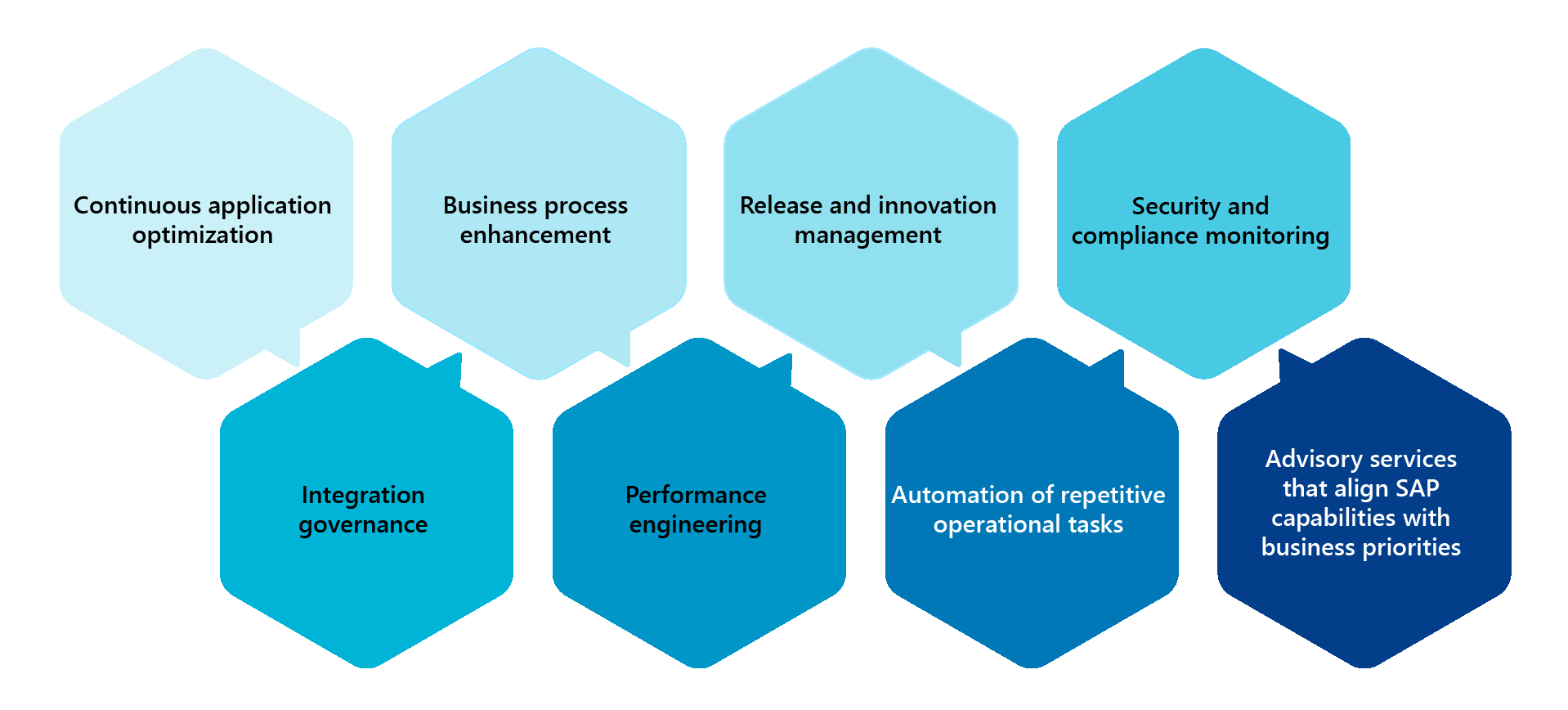
How to Select the Right Partner: The Five Evaluation Dimensions
The five dimensions below map directly to the challenges outlined above. They are the criteria that separate capable partners from well-marketed ones.
1. Evaluate Their Data and Enterprise Integration Expertise
Every successful Agentforce implementation starts long before the first AI agent is configured.
The quality of autonomous decision-making depends entirely on the quality, accessibility, and consistency of enterprise data. Customer information often resides across Salesforce, ERP applications, service platforms, data warehouses, and numerous third-party systems. Unless these data sources are connected and governed effectively, AI agents can only operate with a partial understanding of business context.
This is why experienced Salesforce Agentforce partners begin with data readiness rather than use-case discussions.
Instead of immediately demonstrating AI capabilities, they assess how enterprise data is structured, identify integration gaps, evaluate Data Cloud readiness, and determine whether existing information can support intelligent reasoning at scale.
During partner evaluation, consider asking:
- How will they assess your existing data landscape?
- What methodology do they use to unify data across enterprise platforms?
- Can they demonstrate experience integrating Salesforce with complex enterprise ecosystems?
- How do they ensure AI agents access trusted, current, and governed business information?
Organizations that invest in strengthening their data foundation before deployment typically experience fewer implementation delays and achieve faster time to value.
2. Look Beyond Certifications
As Agentforce adoption accelerates, certifications are becoming increasingly common across the Salesforce ecosystem.
However, enterprise buyers should distinguish between theoretical knowledge and real-world implementation experience.
Holding an Agentforce specialist certification demonstrates familiarity with the platform and validates foundational technical knowledge. It does not necessarily indicate experience designing autonomous AI architectures, resolving production challenges, or governing enterprise-scale AI deployments.
The questions that matter are different.
Has the partner implemented autonomous AI in production?
Can they explain how they handled complex integration scenarios, governance challenges, or AI performance optimization?
Do they have architects and consultants dedicated to Agentforce, or are they extending traditional Salesforce implementation teams into AI projects?
Similarly, organizations should consider the maturity of the broader Salesforce practice. Working with a Salesforce Summit Partner often provides additional confidence that the organization has demonstrated sustained delivery excellence, customer success, and platform expertise across multiple Salesforce solutions. While partner status should never be the sole selection criterion, it can serve as one indicator of delivery capability when combined with proven Agentforce experience.
3. Assess Whether They Follow an AI-Native Delivery Methodology
One of the biggest misconceptions surrounding Agentforce implementations is treating them like traditional Salesforce projects.
Conventional software follows deterministic rules—identical inputs generate identical outputs. Autonomous AI systems operate differently. They reason probabilistically, meaning their behaviour must be continuously evaluated, refined, and monitored rather than simply tested once before deployment.
This is why Salesforce introduced the Agent Development Life Cycle (ADLC), a delivery methodology specifically designed for autonomous AI systems.

“The ADLC is a wholly new approach to developing software that accounts for the massive differences between developing probabilistic reasoning systems versus traditional deterministic software. When used properly, this methodology guarantees successful, robust, reliable results.”
Murali G Sivanandam,
Salesforce Director, Everforth Quinnox
Unlike traditional software development approaches, this methodology emphasizes:
- Defining clear business objectives, agent roles, and governance boundaries before development begins.
- Iteratively refining prompts, reasoning logic, and business actions throughout implementation.
- Testing agents against real-world scenarios and edge cases instead of relying solely on conventional user acceptance testing.
- Monitoring agent behaviour after deployment and continuously improving performance using production insights.
When evaluating a partner, ask them to explain how they use the ADLC in real projects and how they manage each phase from planning to ongoing operations.
| Phase | What a capable partner does |
|---|---|
| Ideation & Design | Define agent purpose, persona, tools, and guardrails before a single line of configuration. Intent specification errors propagate through every subsequent phase. |
| Development (inner loop) | Iterative build combining low-code configuration and pro-code extensibility. Agent Script DSL enforces deterministic guardrails where probabilistic behavior is unacceptable. |
| Testing & Validation | Behavioral testing, edge case simulation, hallucination benchmarking. Traditional UAT is structurally insufficient for non-deterministic systems. |
| Deployment | Phased rollout: internal test → controlled pilot → production. Each phase generates behavioral data that feeds the outer loop. |
| Monitoring & Tuning (outer loop) | STDM session trace analysis, routing failure detection, continuous prompt and tool optimization. This is ongoing improvement — not maintenance. |
A partner that approaches Agentforce like a conventional CRM implementation may successfully deploy an AI agent but not necessarily an enterprise AI capability. While the one who succeeds will be those who recognize that AI implementation is an ongoing operational discipline rather than a one-time technology project.
4. Balance Speed with Governance
One of the biggest promises surrounding Agentforce is rapid deployment. With prebuilt templates, low-code configuration, and Salesforce’s AI capabilities, organizations can launch pilot use cases in weeks rather than months.
While speed is important, enterprise AI cannot succeed if implementation outpaces governance.
Unlike traditional automation, autonomous AI agents make decisions, access enterprise knowledge, and perform actions on behalf of users. Without clear governance, organizations risk inconsistent outputs, compliance issues, data privacy concerns, and reduced user trust.
The best Salesforce Agentforce partners understand that governance should not slow innovation – it should enable it.
When evaluating a partner, assess whether they can help you establish:
- Clear guardrails defining what AI agents can and cannot do.
- Human-in-the-loop approval mechanisms for high-risk or business-critical processes.
- AI governance frameworks covering compliance, security, and responsible AI practices.
- Prompt management and version control processes.
- Monitoring capabilities that continuously measure agent accuracy, reliability, and business outcomes.
Governance should not be viewed as a post-implementation exercise. It should be embedded into the solution architecture from day one.
5. Evaluate Their Understanding of the Business Value and Commercial Model
One of the most overlooked aspects of Agentforce implementation is commercial planning.
Unlike traditional software deployments that primarily focus on licenses and implementation effort, Agentforce introduces a consumption-based model where usage, agent actions, and workflow complexity directly influence costs.
An implementation partner should therefore help enterprises think beyond technical deployment and understand the long-term economics of autonomous AI.
During partner evaluation, ask whether they can help you:
- Estimate AI consumption based on expected business volumes.
- Prioritize high-value use cases that deliver measurable ROI.
- Optimize AI usage without increasing operational costs.
- Define success metrics aligned with business outcomes rather than technical outputs.
- Build a roadmap that supports future expansion without unnecessary rework.
The right partner will encourage organizations to start with use cases that create measurable business value while establishing a scalable foundation for future AI initiatives. This approach enables enterprises to demonstrate quick wins while maintaining financial discipline as adoption grows.
Ready to evaluate your Agentforce readiness?
Download our complimentary 5-Dimension Framework for Evaluating Salesforce Agentforce Partners to assess your organization’s readiness and make a more informed implementation partner selection.
Conclusion
Success with Agentforce isn’t defined by how quickly your first AI agent goes live. It’s measured by how effectively intelligent agents integrate into business workflows, adapt as business needs evolve, and continuously deliver measurable business outcomes at scale.
The most effective Agentforce partners combine deep Salesforce expertise with proven capabilities in AI, enterprise integration, data modernization, governance, security, and organizational change management. They don’t just deploy AI – they build the foundation for responsible, scalable, and outcome-driven adoption.
At Everforth Quinnox, we believe Agentforce is more than an AI platform – it’s a catalyst for enterprise transformation. By bringing together deep Salesforce expertise, AI-led engineering, enterprise integration, data modernization, and business transformation capabilities, we help organizations move confidently from AI experimentation to enterprise-wide execution.
From identifying high-impact Agentforce use cases and designing intelligent agent workflows to integrating enterprise data, implementing governance frameworks, and scaling AI across business functions, we partner with organizations at every stage of their Agentforce journey—helping them accelerate time to value, minimize implementation risks, and maximize long-term business impact.
Ready to unlock the full potential of Agentforce? Partner with Everforth Quinnox to design, deploy, and scale autonomous AI that delivers measurable business impact—today and for the future.

Deputy Manager, Marketing, Everforth Quinnox
FAQs
Look for a partner with expertise beyond Salesforce implementation. The right partner should have proven experience in AI strategy, enterprise integration, data modernization, governance, security, and change management to ensure Agentforce delivers measurable business outcomes at scale.
Agentforce relies on trusted enterprise data, integrated business systems, and well-defined governance. Without these foundations, AI agents cannot deliver accurate, reliable, or scalable outcomes, regardless of platform expertise.
Evaluate partners across multiple dimensions, including:
- Salesforce and Agentforce expertise
- AI and autonomous agent capabilities
- Enterprise integration experience
- Data readiness and governance
- Security and compliance
- Industry knowledge
- Change management and adoption
- Post-deployment optimization and managed services
Data readiness is critical. Agentforce depends on accurate, governed, and connected enterprise data to generate reliable recommendations and execute business workflows. Poor data quality directly impacts AI performance and user trust.
Yes. Agentforce can integrate with Salesforce, ERP platforms, CRM systems, data warehouses, collaboration tools, and third-party applications. An experienced implementation partner should design secure, scalable integrations that enable AI agents to operate across enterprise workflows.
Success should be measured through business outcomes such as:
- Improved productivity
- Faster case resolution
- Higher employee efficiency
- Increased customer satisfaction
- Reduced operational costs
- Revenue growth
- AI adoption rates
- ROI and business value delivered
Everforth Quinnox combines deep Salesforce expertise with AI-led engineering, enterprise integration, data modernization, governance, and business transformation capabilities. From identifying high-value use cases to designing intelligent agent workflows and scaling autonomous AI across the enterprise, Everforth Quinnox helps organizations accelerate time to value while minimizing implementation risk.
The Agent Development Lifecycle (ADLC) is a structured framework for designing, deploying, governing, and continuously improving AI agents throughout their lifecycle. Similar to the Software Development Lifecycle (SDLC), ADLC ensures that autonomous AI solutions are built responsibly, securely, and with measurable business outcomes in mind.
Agentforce implementations should be continuously monitored and optimized rather than treated as one-time deployments. Organizations should consider updating their Agentforce implementation:
- When business processes or workflows change.
- After major Salesforce or Agentforce platform releases.
- As new enterprise data sources or integrations become available.
- When introducing new AI use cases or expanding to additional business functions.
- Based on performance metrics, user feedback, and governance reviews.