Accelerate IT operations with AI-driven Automation
Automation in IT operations enable agility, resilience, and operational excellence, paving the way for organizations to adapt swiftly to changing environments, deliver superior services, and achieve sustainable success in today's dynamic digital landscape.
Driving Innovation with Next-gen Application Management
Next-generation application management fueled by AIOps is revolutionizing how organizations monitor performance, modernize applications, and manage the entire application lifecycle.
AI-powered Analytics: Transforming Data into Actionable Insights
AIOps and analytics foster a culture of continuous improvement by providing organizations with actionable intelligence to optimize workflows, enhance service quality, and align IT operations with business goals.
Data is now more accessible than ever before. But having access to data isn’t the same as harnessing its power. Many organizations find themselves overwhelmed, drowning in spreadsheets, wrestling with disconnected databases, and struggling to piece together a clear picture from fragmented information.
The challenge isn’t the lack of data; it’s turning that raw, often messy information into reliable insights that actually drive action. Moreover, the financial impact of underleveraged data is enormous. In the U.S. alone, companies face losses estimated at around $3.1 trillion each year due to poor data quality. On average, knowledge workers spend half their time correcting data errors instead of focusing on tasks that drive real value. This inefficiency translates to roughly 30% of annual revenue slipping away because they haven’t yet adopted a strategic, holistic approach to data management.
This is where Strategic Data Management (SDM) becomes a game-changer. When done right, SDM moves your organization beyond reactive fixes and guesswork, turning scattered facts into meaningful insights, eliminating guesswork and paving the way for smarter decisions and real results.
What Is Strategic Data Management?
Strategic Data Management is the disciplined approach to collecting, organizing, governing, and leveraging data as a strategic asset to support an organization’s long-term goals. Here the data management process is not only about storing information, it’s about aligning data initiatives with business objectives to drive better decision-making, improve operational efficiency, and create competitive advantage.
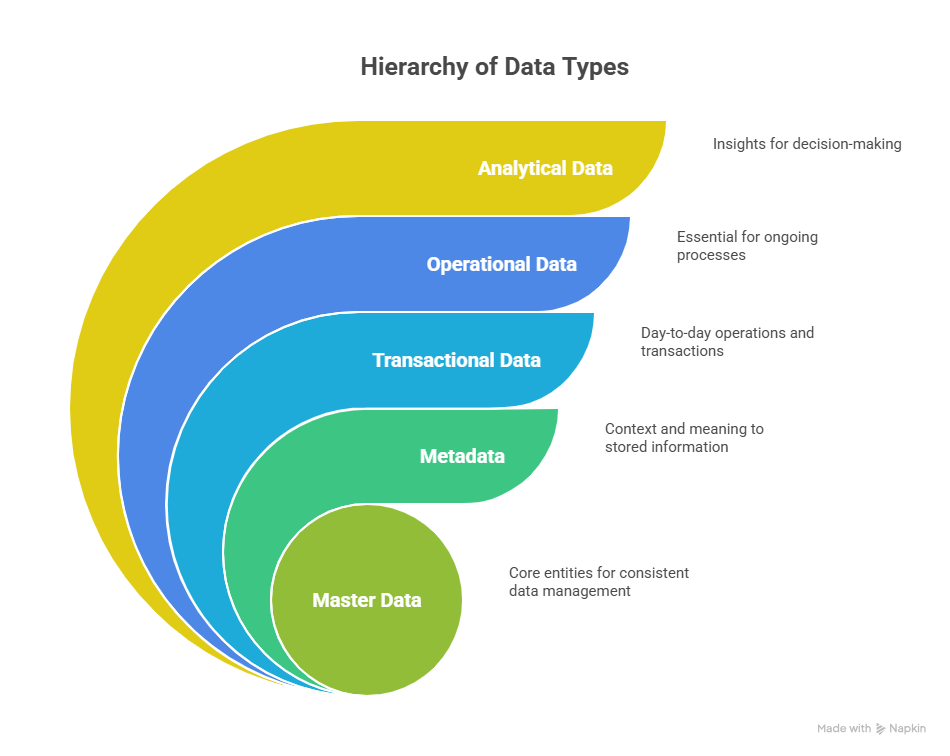
Key Components of Strategic Data Management
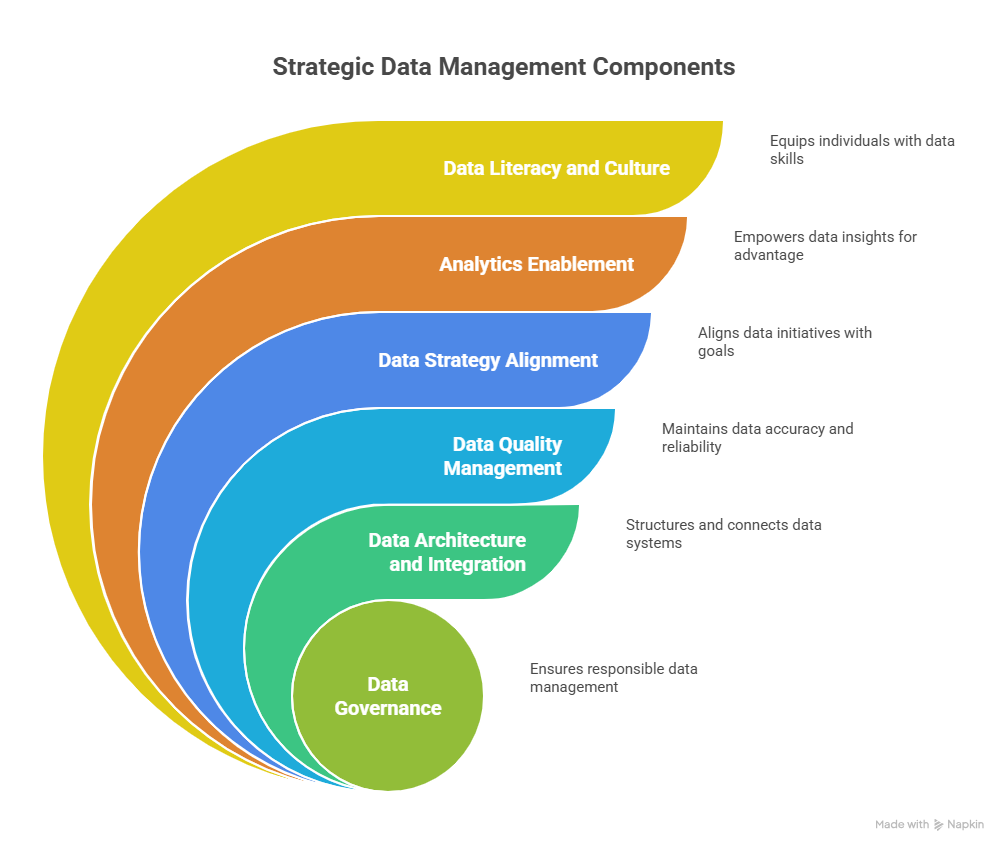
Data Governance
This is the foundation of SDM. It involves setting clear policies, roles, and responsibilities to ensure data is accurate, secure, and used ethically. Good governance reduces risk and ensures compliance with industry regulations and data privacy laws.
Data Architecture and Integration
Strategic data management requires a robust architecture that can support the flow of data across systems. This includes integrating siloed sources—like ERP, CRM, and IoT platforms—so decision-makers have access to a single source of truth.
Data Quality Management
Poor-quality data leads to poor decisions. SDM emphasizes processes to continuously monitor and improve data accuracy, consistency, and completeness, ensuring that data remains reliable in the long-run, even as systems and teams evolve.
Data Strategy Alignment
What sets SDM apart from day-to-day data handling is its alignment with business strategy. Data initiatives are prioritized based on how they support business goals whether that’s improving customer experience, optimizing supply chains, or enabling predictive maintenance.
Analytics Enablement
Strategic data management creates the foundation for advanced analytics, machine learning, and AI. Clean, well-organized data accelerates insights and enables smarter forecasting, trend analysis, and scenario planning.
Hence, regularly monitoring data quality, conducting planned and unplanned audits, and leveraging tools that validate data becomes crucial. This is where AI data quality tools are proving game changers here as they help flag errors, duplicates, and even missing values in your data, saving time and reducing human error.
Data Literacy and Culture
A strategic approach also involves developing a data-conscious culture. This means empowering employees at all levels to understand, question, and use data responsibly in their roles.
Core Benefits of Strategic Data Management
Impact of data observability and data management goes beyond just organizing, it’s about creating frameworks and systems that serve a far more greater purpose.
Here are some major benefits that will benefit across multiple business functions
1. Better Decision-Making and Analytics
Companies that invest in or build systems that help align faster across departments. Whether it’s sales forecasting, product development, or GTM strategy, teams can access accurate data aligned to business priorities.
More importantly, when leadership decisions are driven by data, decision velocity increases and with that comes faster execution, reduced problems, and an outcome that you can predict with confidence.
2. Enhanced Compliance and Risk Reduction
Initially, companies used to maintain compliance for the sake of maintaining reputation, trust, and operational continuity. But now the times have changed, especially in regulated industries like healthcare and banking; the cost of non-compliance is just too big.
So, with enterprise data management strategy in place, you support compliance by:
- Automating data retention and deleting schedules
- Creating auditable data and keeping activity logs
- Ensuring data is classified and encrypted.
3. Improved Efficiency and Cost Optimization
When datasets are duplicate across tools, teams, and clouds, it is one of the biggest silent costs in enterprise IT.
With strategic data management, you and your team can minimize these inefficiencies by creating a unified architecture. When data is centralized and standardized, it reduces time spent cleaning, reconciling, and searching for information. Companies can end up achieving up to 15–30% total cost savings.
Let’s assume a product team launching a new feature. Without standardized data definitions, the marketing team might interpret customer churn differently from product analytics. This will create confusion, duplicated analysis, and lead to slower rollouts. This is where database management ensures everyone works off the same definitions and datasets, saving time and reducing friction.
4. Stronger Security and Governance
Data breaches don’t just carry regulatory consequences; they destroy customer trust and affect brand equity. With AI and data services, companies can help mitigate this risk by enforcing security and governance policies from the ground up.
For instance, role-based access controls (RBAC) make sure that only the right people can view sensitive customer or financial data. The encryption ensures that information is protected from unauthorized interception.
Beyond just reacting to threats, strategic data management helps prevent them by integrating security into every layer, from storage to analytics to reporting. This makes it easier for security and compliance teams to monitor risk, apply policies, and scale data access without compromising security.
A 7-Step Framework for Strategic Data Management
Recognizing the importance of strategic data management is just the beginning. The true test lies in putting it into practice. This step-by-step framework provides a clear, actionable roadmap to help organizations transform data chaos into meaningful clarity.
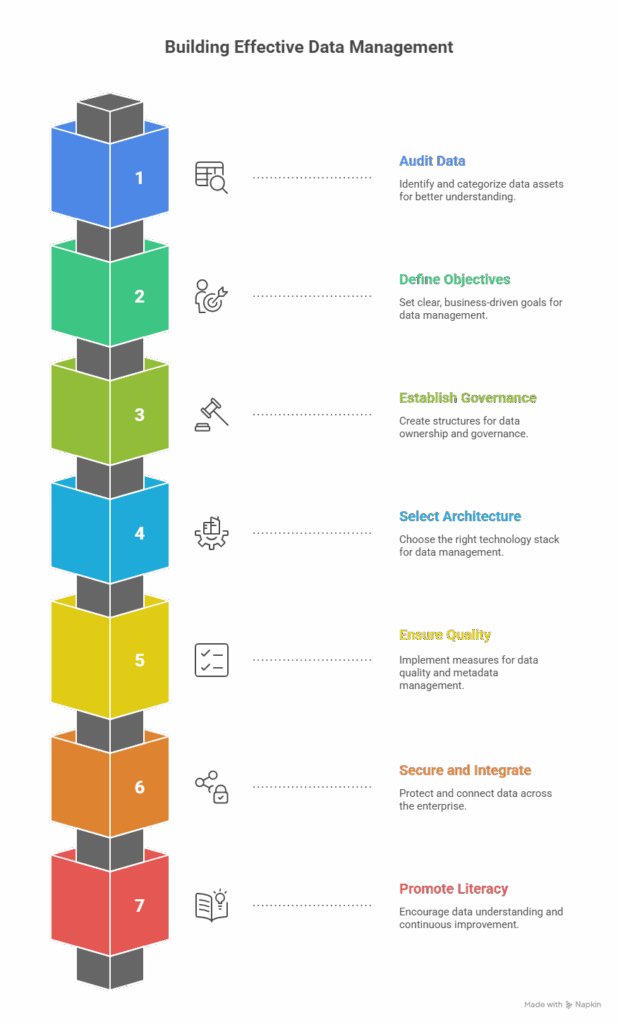
Step 1: Audit and Classify Your Data Assets
Begin by taking inventory of your data, which includes identifying what data you possess and where it resides. This means cataloging every data source, whether it’s databases, cloud storage, spreadsheets, or third-party applications.
This classification will help you understand data sensitivity levels, compliance requirements, and business value.
Step 2: Define Business-Driven Data Objectives
Work with stakeholders across departments to understand their data needs and pain points. Set clear, measurable objectives that connect data initiatives to business outcomes.
For example, if for your company the goal is to improve customer retention, then you need to start by identifying the data needed to track customer behavior, predict churn, and measure the effectiveness of each touchpoint. This will help to understand key areas of performance.
Step 3: Establish Governance and Ownership Structures
Data management strategy helps maintain quality over time. At this stage, it is recommended to establish data ownership roles and define who is responsible for data quality, security, and access permissions.
- Create policies for data usage, sharing, and retention that balance accessibility along with security.
- Assign specific individuals or team responsibility for different data domains, so that someone is accountable for maintaining standards and resolving issues.
Step 4: Select the Right Architecture and Technology Stack
We have seen companies and enterprises thrive because they made conscious choices when choosing the tech stack that matched their current needs and future growth plans. This includes configuring data management processes, integration tools, database analytics platforms, and security solutions. Hence, while selecting your tech stack make sure you consider factors like scalability, compatibility with existing systems, and total cost of ownership before taking the final call.
On the other hand, while cloud-based solutions deliver unmatched flexibility and scalability, on-premises options offer greater control, each with its own advantages depending on your business priorities.
Step 5: Ensure Data Quality and Metadata Management
Low-quality data can undermine all your hard work. So, establish processes to validate, cleanse, and maintain data accuracy integrating data with AI where possible. This should include automated quality checks, standardized data entry protocols, and routine audits to ensure ongoing reliability.
Step 6: Secure and Integrate Data across the Enterprise
Now, as we get closer to the later stages, break down data silos by implementing integration strategies that connect separate systems, so also keep track of all the control surfaces that you have.
This might involve APIs, data lakes, or integration platforms that enable seamless data flow between applications.
Security should be built into every integration point and for that make sure to implement encryption, access controls, and monitoring to protect data as it moves through your systems.
Step 7: Promote Data Literacy and Continuous Optimization
Even if you have the best data infrastructure, it will fail if it does not reach the user or if the user fails to adopt. So don’t forget to invest in training programs that help employees in understanding and creating AI-ready data effectively.
Further, create self-service analytics capabilities that empower users to find insights without IT assistance, later leverage those feedback loops, and take regular reviews to continuously improve your data management process. Technology and business needs evolve, so it’s fair that your data strategy must adapt accordingly.
Common Pitfalls to Avoid in Data Management Strategy Execution
While the promise of unlocking valuable insights and driving smarter decisions is enticing, many organizations stumble along the way. Common challenges and missteps can derail even the most well intentioned initiatives, leading to wasted resources and stalled progress. To help you navigate this complex journey, here are some of the most frequent pitfalls to watch out for and how avoiding them can set your data strategy on the path to lasting success.
1. Treating Data Management as an IT-Only Project
When data projects are seen as just another IT task, they often stall after initial pilots because they lack broad ownership and alignment with business goals. While technology is critical, data initiatives need to be driven by the business and involve cross-functional collaboration.
Data is a strategic asset that touches every part of the organization—marketing, sales, operations, finance and success requires a shared vision and partnership across teams.
2. Overlooking Change Management and User Engagement
Rolling out new data processes or tools without properly preparing and involving the people who use them is a recipe for failure. Users need not only training but also incentives and ongoing support to adopt new ways of working.
Without a strong data culture, even the best technology can go underutilized. Additionally, holding onto outdated or irrelevant data adds unnecessary storage costs and exposes the organization to compliance risks. Hence, change management must be an intentional part of the strategy, with clear communication and continuous engagement.
3. Starting Without Clear Business Objectives
Jumping into data management with a focus on technology capabilities rather than business outcomes leads to expensive solutions that don’t move the needle. It’s crucial to begin with well-defined business goals whether that’s improving customer retention, optimizing supply chains, or enhancing product innovation. From there, the data strategy can be tailored to support those objectives, ensuring every investment delivers measurable value.
4. Neglecting to Plan for Training and Phased Implementation
Data strategy execution isn’t a flip-the-switch moment. Successful implementation requires a thoughtful plan for training users, maintaining open communication, and rolling out changes gradually. This phased approach helps minimize disruption, builds confidence across teams, and allows for adjustments based on feedback.
5. Ignoring Data Quality from the Start
Data quality is foundational. When quality controls are an afterthought, problems multiply quickly—leading to mistrust, inaccurate analyses, and costly fixes down the line. Therefore, organizations need to incorporate validation, cleansing, and governance processes into the initial design of data management system as addressing quality early ensures insights are reliable and decision-making is sound.
6. Trying to Solve Everything at Once
Ambition is great, but trying to overhaul your entire data ecosystem overnight will almost certainly backfire. Complex projects with too many moving parts can create confusion, delays, and burnout.
Instead, focus on starting small with high-impact, manageable initiatives. Deliver quick wins to build momentum, demonstrate value, and create a foundation for scaling your data strategy effectively over time.
Measuring the Success of Your Data Management Strategy
To know if your database management strategy is on the right direction, track these key metrics to evaluate your data strategy:
1. Compliance and Regulatory Alignment
One of the clearest signs of a mature data management strategy is consistent compliance with relevant regulations, whether it’s GDPR, HIPAA, or industry-specific standards.
Track audit outcomes, data breach reports, and internal policy adherence to gauge how well your data practices are aligned with legal and regulatory expectations. Zero violations should be your benchmark, not just your goal.
2. Business Impact and Value Contribution
Look at key business metrics such as increased revenue, improved customer satisfaction, faster product delivery, or reduced churn. Then connect these outcomes back to your data initiatives. For example, if enhanced data quality led to a more accurate sales forecast, which then influenced better inventory planning, quantify that downstream value.
3. Data Quality and Reliability
High-quality data is the foundation of every successful strategy. Track metrics like error rates, duplication frequency, data completeness, and how often records require correction. These indicators provide a clear view into whether your systems are producing trusted, usable data or if they’re still generating friction.
4. Data Usage and Adoption Analytics
A well-managed data ecosystem should be actively used across the organization. Monitor how often users access data, which dashboards or reports are most viewed, and how quickly they’re able to find what they need. Low usage can indicate usability issues, poor data literacy, or misalignment with actual business needs.
5. Speed of Decision-Making
One of the most overlooked but vital benefits of good data management is faster, more confident decision-making. Measure the time it takes for teams to move from accessing data to taking action. If that time is shrinking, it’s a clear sign your strategy is enabling agility and responsiveness.
6. Operational Cost Savings
A solid data management strategy should also lead to measurable efficiency gains. These can come from reducing time spent searching for data, lowering storage and infrastructure costs, eliminating redundant systems or cutting back on manual reporting efforts. Track both direct savings and indirect benefits such as reduced overhead and improved staff productivity.
Conclusion
We’re in a data-driven economy where strategy matters more than scale. Organizations that can crack this early, will only reap the benefits of lean operational efficiency. They will be able build and scale, boost innovation, and maintain a lasting competitive advantage.
At Quinnox, we understand that managing data effectively requires more than just tools as it demands intelligent solutions that evolve with your business. That’s why our Gen AI-powered solutions and Data Intelligence services goes beyond traditional approaches, seamlessly integrating advanced analytics, automation, and AI-driven insights to help you manage, interpret, and leverage your data with unprecedented accuracy and speed.
Ready to transform your data into a strategic asset that accelerates innovation and drives measurable results?
Reach our data experts and leverage our QAI Studio today to start your transformation journey!
FAQs About Strategic Data Management
Strategic data management is a way to collect, store, analyze, and use data to get closer to your business goals. The strategy ensures that the data is accurate, secure, and accessible, turning it into a trusted asset.
A good data management strategy will help you make smarter decisions, ensure compliance, and increase efficiency. It organizes data to support goals like improving customer satisfaction or cutting costs. McKinsey & Company, 2023, states that strong data strategies can increase revenue by 15%, helping businesses stay competitive
The key components are data governance (clear rules for data handling), data integration (unifying data from multiple sources), data security (protecting against breaches), and data quality (ensuring accuracy and reliability). These elements work together to make data a reliable tool for decision-making and innovation.
The essential steps include auditing data assets, defining business-driven goals, maintaining governance, selecting the right tech stack, ensuring data quality, integrating data.
A structured data management approach improves decision-making, ensures compliance, enhances efficiency, and strengthens security. It helps businesses make faster, data-driven choices, reduce risks, save costs, and protect sensitive information. For example, once you start organizing data it can lead to streamline operations, cost reduction and boosts customer trust.