Introduction: The Shift to the Agentic Enterprise
There is a question I find myself asking more often these days after client meetings: What does it really mean to be a trusted partner in the age of AI?
It’s a question that didn’t exist a few years ago—at least not in the way it does today.
Having spent decades in technology service delivery, I’ve seen every major wave of transformation. I’ve witnessed organizations embrace ERP modernization, cloud migration, digital transformation, automation, and data-driven decision-making. Each wave promised to redefine how businesses operate, and each one did in its own way.
But Artificial Intelligence (AI) feels fundamentally different.
Not because it is more powerful than every technology before it, but because it is changing something much deeper than technology itself. It is changing the nature of conversations we have with our clients.
And for someone responsible for service delivery, that shift has been impossible to ignore.
The Conversation Has Changed
A few years ago, client discussions were largely centered on execution.
- How quickly can we implement?
- Can we optimize this process?
- How do we reduce costs?
- How many resources will the project require?
Today, those questions still matter but they are no longer where the conversation begins.
Instead, I hear questions like:
- “How do we prepare our workforce for AI?”
- “Which decisions should AI make and which should remain human?”
- “How do we innovate without compromising trust?”
- “Can AI help us become more resilient, not just more efficient?”
These are not technology questions. They are business questions. Leadership questions.
Sometimes even philosophical questions.
That shift tells me something important that clients are no longer looking for someone to deploy technology. They are looking for someone who can help them make sense of what AI means for their business.
And that’s a very different responsibility.
“Success today isn’t simply about delivering what was promised—it’s about helping clients discover opportunities they didn’t know existed.”
AI Didn't Change My Role—It Expanded It
When people think about service delivery, they often imagine project plans, delivery governance, milestones, and operational excellence.
Those responsibilities remain as important as ever. But what has changed is what clients expect from someone in my role.
Increasingly, I find myself spending less time discussing delivery timelines and more time facilitating conversations between business leaders, technology teams, and operations executives. We discuss organizational readiness, responsible AI, employee adoption, governance, and long-term business impact.
In many ways, service delivery has evolved into business advisory.
Success today isn’t simply about delivering what was promised. It’s about helping clients discover opportunities they didn’t know existed.
Technology Is Becoming Easier. Decisions Are Becoming Harder.
There has never been a time when organizations have had access to so many AI platforms, cloud services, automation tools, and enterprise solutions. But today, the options are almost endless.
Ironically, that abundance creates a new kind of complexity as clients rarely ask me which AI model is the best. Instead, they ask something much more difficult.
- “Where should we begin?”
- “What should we automate?”
- “What shouldn’t we automate?”
- “How do we create value without creating unintended consequences?”
Those are not questions that any technology can answer on its own.
They require experience.
Context.
Judgment.
And perhaps most importantly, trust.
Trust Has Become More Valuable Than Expertise
Early in my career, expertise was often enough.
If you understood the technology better than anyone else, clients naturally looked to you for answers.
Today, expertise is only part of the equation.
AI can generate recommendations.
It can summarize information.
It can write code.
It can analyze enormous volumes of data in seconds.
What AI cannot replace is confidence.
Clients need confidence that someone understands their business not just the technology.
They need confidence that difficult trade-offs will be discussed openly.
They need confidence that innovation will be balanced with responsibility.
Over the past few years, I’ve come to believe that trust has become the single most valuable asset any services organization can build.
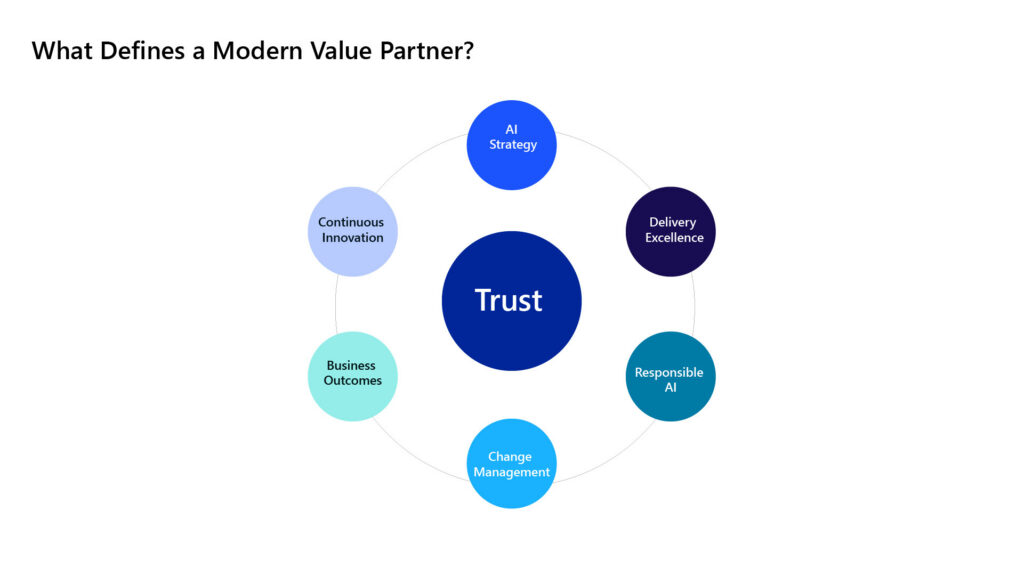
Without it, AI simply becomes another tool.
With it, AI becomes a catalyst for transformation.
| Industries | Agentforce Use Cases |
|---|---|
| Logistics | AI Shipment Orchestrator Agent |
| Manufacturing | Smart Lead-to-Order Conversion (Dealer / Distributor Network) |
| Banking | Intelligent Loan Pre-Approval & Offer Personalization |
| Recycling / Green Energy | Intelligent Renewable Energy Demand–Supply Optimization & Sales Acceleration |
| Healthcare | Intelligent Patient Care Coordination & Proactive Intervention |
| Real Estate & Property Management | AI-Powered Property Sales, Tenant Management & Maintenance Automation |
| Travel, Hospitality & Tourism | AI Concierge & Personalized Travel Experience Automation |
The Best Client Engagements No Longer Feel Transactional
One of the most rewarding aspects of my role has always been building long-term client relationships.
Those relationships look very different today.
Earlier, engagements often had a clear beginning and end.
Requirements were gathered.
Solutions were designed.
Projects were delivered.
Support followed.
Everyone moved on.
AI doesn’t work that way.
Models evolve.
Business priorities shift.
Data changes.
Customer expectations continue to rise.
An AI solution deployed today will almost certainly need refinement tomorrow. That means our relationship with clients cannot end when a project goes live.
If anything, that’s when the real partnership begins.
The conversations become more strategic.
- What new insights are emerging?
- What additional processes could benefit from AI?
- How do we measure business value?
- How do we ensure responsible governance as adoption grows?
The relationship becomes continuous rather than contractual.
Personally, I find that incredibly exciting because it allows us to contribute far beyond implementation.
Sometimes the Biggest Challenge Isn't AI
One lesson I’ve learned repeatedly is that AI projects rarely fail because of technology.
More often, they struggle because organizations underestimate the human side of transformation.
People naturally have questions.
- Will AI replace my role?
- Can I trust its recommendations?
- Will leadership still value human judgment?
These concerns deserve thoughtful answers.
Successful AI adoption isn’t about replacing people.
It’s about enabling people to make better decisions, solve more meaningful problems, and focus on higher-value work.
That requires communication.
Leadership.
Empathy.
Training.
And patience.
No algorithm can substitute for those qualities.
From Delivering Projects to Delivering Confidence
When I reflect on how my own approach has evolved, one realization stands out.
Earlier in my career, success meant delivering successful projects. Today, success means helping clients feel confident about navigating uncertainty.
Sometimes that involves implementing AI.
Sometimes it involves advising against it.
Sometimes it means helping a client slow down instead of speeding up.
That may sound counterintuitive in today’s race toward AI adoption. But responsible transformation isn’t about adopting every new capability.
It’s about making the right decisions for the business.
I’ve found that clients value honesty far more than enthusiasm.
They remember the partners who challenge assumptions, ask difficult questions, and prioritize long-term outcomes over short-term wins.
The Future Belongs to Value Partners
If there’s one change, I believe AI has accelerated more than any other, it’s this: the era of transactional vendor relationships is coming to an end.
Organizations no longer need partners who simply execute instructions.
They need partners who think alongside them.
Who challenge them when necessary.
Who bring ideas before they’re asked.
Who understand their business as deeply as they understand technology.
Who stay invested long after the implementation is complete.
That’s what I believe a value partner looks like.
At Everforth Quinnox, this philosophy shapes how we engage with every client. We don’t measure our success solely by the projects we deliver or the technologies we implement. We measure it by the confidence we help build, the business outcomes we help unlock, and the relationships we continue to strengthen over time.
AI will continue to evolve. New models will emerge, new capabilities will become mainstream, and new disruptions will inevitably reshape our industry.
But one thing, I believe, will remain constant.
Technology may open the door to transformation.
It is trust that ultimately determines how far that transformation goes.
And in the age of AI, that is what truly distinguishes a vendor from a value partner.
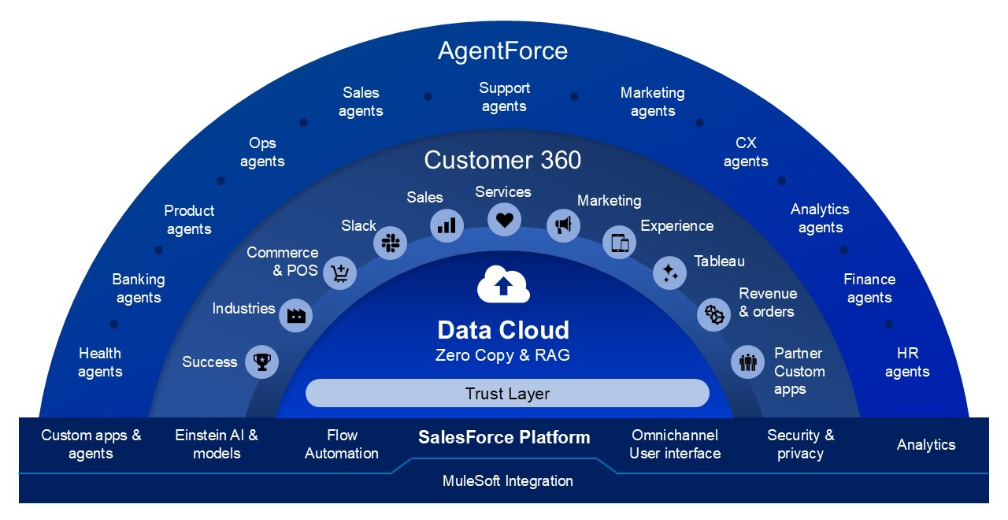
Establish a Unified Data Layer
Modern Agentforce implementations rely on connected enterprise data. Organizations should evaluate:
- CRM data architecture
- ERP integrations
- Data warehouses
- API ecosystems
- Third-party business applications
Many enterprises leverage:
- Salesforce Data Cloud
- MuleSoft integrations
- External APIs
- Real-time event streaming
…to create unified customer and operational views.


Executive VP of Service Delivery, Everforth Quinnox
FAQs
AI is shifting client engagement from execution-focused interactions to strategic collaboration. Instead of simply implementing technology, service providers are helping clients navigate AI adoption, governance, workforce readiness, and long-term business value, enabling stronger and more trusted partnerships.
A technology vendor primarily delivers solutions based on defined requirements, while a value partner works alongside clients to solve business challenges, identify new opportunities, provide strategic guidance, and support continuous innovation beyond project delivery.
While AI can automate tasks, generate insights, and accelerate decision-making, it cannot replace human judgment, business context, or ethical decision-making. Organizations increasingly value partners they trust to provide responsible guidance, manage risks, and align AI initiatives with business goals.
The biggest challenges are often organizational rather than technical. Businesses must address change management, employee adoption, responsible AI governance, data quality, and identifying the right use cases to ensure AI delivers sustainable business outcomes.
Long-term value comes from treating AI as an ongoing business transformation rather than a one-time implementation. This involves continuously refining AI models, measuring business outcomes, strengthening governance, and working with strategic partners who help evolve AI capabilities as business needs change.