Accelerate IT operations with AI-driven Automation
Automation in IT operations enable agility, resilience, and operational excellence, paving the way for organizations to adapt swiftly to changing environments, deliver superior services, and achieve sustainable success in today's dynamic digital landscape.
Driving Innovation with Next-gen Application Management
Next-generation application management fueled by AIOps is revolutionizing how organizations monitor performance, modernize applications, and manage the entire application lifecycle.
AI-powered Analytics: Transforming Data into Actionable Insights
AIOps and analytics foster a culture of continuous improvement by providing organizations with actionable intelligence to optimize workflows, enhance service quality, and align IT operations with business goals.
Introduction
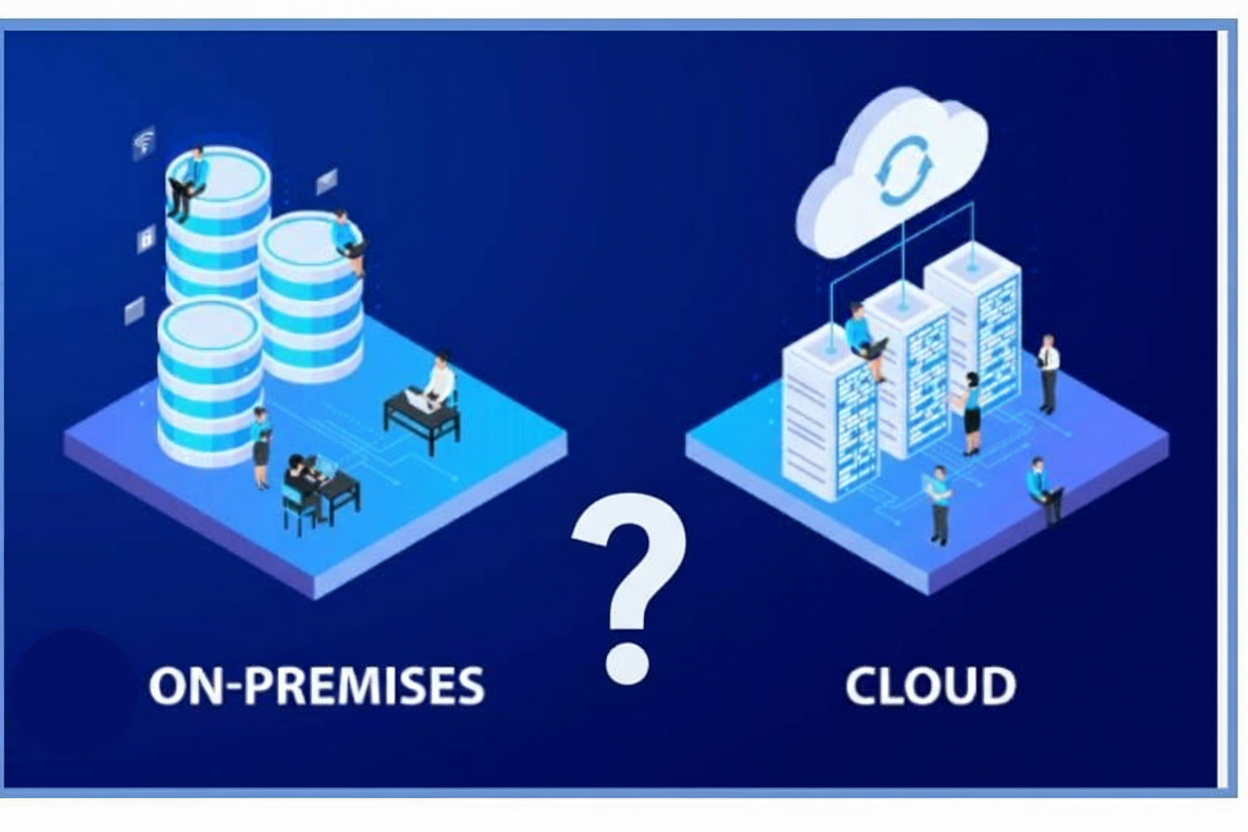
Artificial intelligence is transforming how businesses operate, innovate, and make decisions. Yet as organizations accelerate their AI initiatives, one critical question remains i.e. Where should AI live?
Should you deploy On Premise AI, keeping models, data, and infrastructure within your control? Or, embrace Cloud AI, leveraging the scalability and flexibility of cloud-based ecosystems?
For CIOs and CTOs, this decision extends beyond technology, as it shapes governance, cost structure, and strategic agility. The right choice depends on business priorities, regulatory context, and readiness to scale.
This blog explores the key differences, benefits, limitations, and hybrid possibilities of On Premise AI vs Cloud AI and provides guidance on how to select the best-fit model for your enterprise.
What is On Premise AI
On Premise AI refers to deploying artificial intelligence models, infrastructure, and data storage within an organization’s own data centres or servers. This setup gives enterprises full control over hardware, software, and security configurations.
Traditionally preferred by industries handling sensitive or regulated data like banking, government, or healthcare, On Premise AI ensures that data never leaves the organization’s boundaries.
Key characteristics include:
- AI models and training environments hosted locally.
- Data stored and processed within enterprise-controlled servers.
- Customized infrastructure tailored to specific performance or compliance needs.
- Internal teams manage maintenance, upgrades, and security.
On Premise AI offers complete autonomy but demands significant investments in hardware, technical expertise, and operational upkeep.
What is Cloud AI
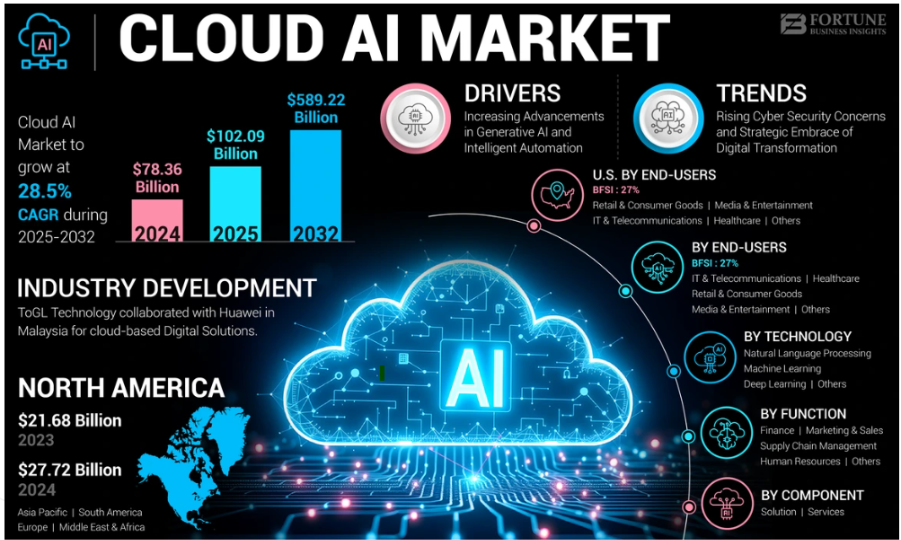
Cloud AI delivers AI capabilities through cloud-based services managed by providers such as AWS, Microsoft Azure, or Google Cloud. Instead of building and maintaining infrastructure, enterprises leverage scalable, pay-as-you-go resources.
Source: Fortune Business Insights
Cloud AI supports rapid experimentation, collaboration, and deployment across geographies. It democratizes access to powerful AI capabilities that once required extensive capital investment.
Key characteristics include:
- Data storage and model training occur in cloud environments.
- Infrastructure scalability supports high-demand use cases.
- Pre-built AI services (such as vision, NLP, and predictive analytics) accelerate adoption.
- Cloud providers handle security, updates, and uptime.
For organizations pursuing agility and innovation speed, Cloud AI provides a Launchpad for enterprise-grade AI solutions.
Key Differences Between On Premise AI and Cloud AI
When it comes to deploying AI solutions, one of the biggest decisions organizations faces is choosing between on premises AI and cloud-based AI. While both approaches harness the power of artificial intelligence, they differ significantly in terms of infrastructure, scalability, security, and flexibility. Understanding these key differences is essential for businesses aiming to align their AI strategy with operational needs, budget constraints, and long-term goals. Let’s dive into what sets on-premises AI apart from cloud AI and how each can shape your organization’s AI journey.
| Aspect | On Premise AI | Cloud AI |
|---|---|---|
| Infrastructure | Hosted and managed internally within enterprise servers. | Managed by cloud providers using shared infrastructure. |
| Cost Structure | High upfront investment; lower long-term operational costs. | Pay-as-you-go model with predictable monthly costs. |
| Scalability | Limited by hardware capacity. | Virtually unlimited scalability on demand. |
| Security & Compliance | Full control, suitable for regulated industries. | Provider-managed, must comply with shared responsibility models. |
| Deployment Speed | Slower due to hardware setup and configuration. | Faster deployment with pre-built frameworks and services. |
| Maintenance | Managed by internal IT teams. | Managed by cloud provider. |
| Performance | Optimized for local workloads with minimal latency. | Dependent on internet connectivity and provider performance. |
While both models deliver powerful AI capabilities, the trade-offs revolve around control, cost, and scalability.
Advantages of On Premise AI
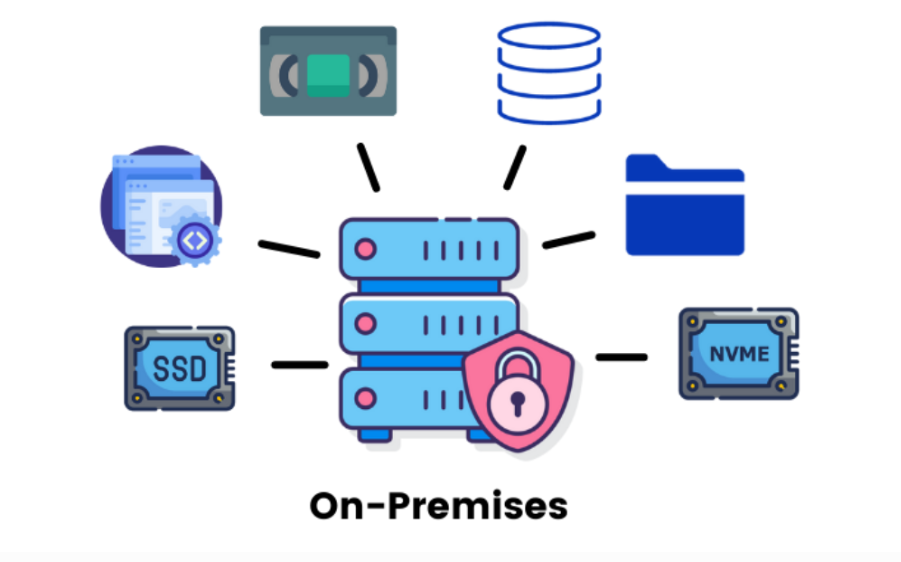
Enterprises choose On Premise AI when control, privacy, and customization outweigh convenience.
1. Enhanced Data Security and Privacy
Sensitive data such as customer transactions, medical records, or classified information—never leaves enterprise boundaries. This reduces exposure to external breaches and meets stringent regulatory requirements like GDPR, HIPAA, or PCI-DSS.
2. Regulatory Compliance
Industries with heavy compliance mandates often mandate data residency. On Premise AI enables adherence to regional data laws and audit trails without relying on third-party cloud environments.
3. Customization and Performance Optimization
Enterprises can fine-tune hardware and software to optimize specific AI workloads—ideal for high-performance computing, deep learning, or proprietary algorithm development.
4. Operational Autonomy
Teams maintain full control over configurations, scheduling, and updates, eliminating dependency on external vendors or service outages.
5. Long-Term Cost Efficiency
Though capital-intensive upfront, On Premise AI can become cost-effective over time for large-scale, steady workloads with predictable demand.
This approach is best suited for organizations with mature IT infrastructure and strong internal capabilities in data governance for AI. Learn more about establishing governance foundations in Quinnox’s data governance for ai.
Advantages of Cloud AI
Cloud AI has become the go-to model for organizations prioritizing speed, flexibility, and scalability.
1. Scalability and Elasticity
Cloud AI enables enterprises to scale compute power dynamically as data volumes and model complexity grow, which is ideal for fluctuating workloads and real-time analytics.
2. Rapid Deployment and Innovation
Pre-built AI frameworks and APIs allow teams to deploy solutions faster without managing infrastructure. This accelerates the AI experimentation cycle and reduces time-to-value.
3. Lower Entry Barriers
With pay-as-you-go pricing, organizations can explore AI capabilities without significant upfront investment. This democratizes AI for mid-size and fast-growing enterprises.
4. Global Accessibility
Cloud environments allow distributed teams to access, collaborate, and innovate across regions seamlessly.
5. Integration with Modern Data Ecosystems
Cloud AI integrates seamlessly with other digital ecosystems like data lakes, IoT platforms, or analytics engines thereby fuelling an organization’s ai readiness journey.
6. Built-in AI Services
Cloud providers offer managed services like AutoML, NLP, and computer vision, reducing the need for custom development.
Enterprises pursuing transformation through scalable automation often pair Cloud AI with Quinnox’s ai and data services to drive measurable business outcomes.
On Premise AI vs Cloud AI: Challenges and Limitations
Challenges of On Premise AI
- High Capital Investment:
Setting up AI infrastructure on premise is often a hefty financial commitment. Organizations need to invest heavily upfront not just in powerful servers and specialized hardware, but also in software licenses and ongoing maintenance. Unlike pay-as-you-go models, this approach ties up significant capital before any benefits can be realized, which can be a barrier for many businesses, especially startups or those with limited budgets.
- Limited Scalability:
Scaling on premise AI systems isn’t as simple as flipping a switch. When demand grows, adding more hardware or upgrading existing systems can be a slow, resource-intensive process, sometimes taking weeks or even months. This lag can hinder a company’s ability to quickly respond to new data volumes or changing business needs, leaving them less agile in a fast-paced market.
- Operational Complexity:
Running AI on premise requires a team with specialized skills who understand not only the technology but also how to maintain, monitor, and optimize it. The complexity of managing physical infrastructure alongside AI models means organizations need dedicated resources, which can divert focus from core business activities.
- Innovation Lag:
AI technology evolves at breakneck speed, with new frameworks, algorithms, and tools emerging regularly. On premise setups can struggle to keep pace, as upgrading infrastructure or integrating new software versions often involves lengthy procurement cycles and downtime. This slows down innovation and may leave companies stuck with outdated capabilities.
Challenges of Cloud AI
- Data Security Concerns:
Storing sensitive data on cloud platforms means trusting a third party with critical information. Although providers invest heavily in security, shared infrastructure raises concerns about data privacy and regulatory compliance. For industries handling confidential or highly regulated data, this can be a major hurdle, requiring careful risk assessment and additional safeguards.
- Vendor Lock-In:
Once an organization commits to a particular cloud provider, switching services or migrating workloads can become complex and costly. Proprietary tools, APIs, and platform-specific features may tie companies to one ecosystem, limiting flexibility and making it harder to adopt better or more affordable options down the road.
- Latency and Connectivity:
Cloud AI relies heavily on internet connectivity. Performance can degrade if network speeds fluctuate or if there are disruptions. For real-time applications or environments where milliseconds matter, these delays can impact user experience or operational efficiency, especially in regions with inconsistent internet infrastructure.
- Cost Overruns:
While cloud AI offers scalable pricing, it can be a double-edged sword. Without careful management, costs can quickly escalate due to unexpected data transfer fees, over-provisioned resources, or unplanned usage spikes. This unpredictability challenges budgeting and requires vigilant monitoring to keep the total cost of ownership under control.
Both models demand thoughtful trade-offs aligned with business goals and AI maturity.
Hybrid Approach: Combining On Premise and Cloud AI
A growing number of enterprises are adopting a hybrid AI strategy i.e. leveraging the strengths of both On Premise and Cloud AI to balance control with scalability.
How it works:
- Sensitive data and mission-critical workloads stay On Premise.
- Cloud AI handles non-sensitive analytics, large-scale training, or global deployments.
Benefits of the hybrid approach include:
- Data Sovereignty: Sensitive data remains within enterprise boundaries.
- Cost Efficiency: Compute-intensive tasks utilize cloud elasticity on demand.
- Flexibility: Workloads can be moved based on performance, cost, or compliance needs.
- Business Continuity: Redundancy across environments reduces downtime risks.
Forward-thinking enterprises view hybrid AI as a bridge between legacy systems and modern ai ready data ecosystems, enabling innovation without compromising governance.
How to Choose the Right AI Deployment Model for Your Business
Selecting between On Premise AI and Cloud AI depends on strategic priorities, data sensitivity, and long-term scalability goals. CIOs and business leaders should evaluate across five key dimensions:
1. Data Sensitivity and Compliance
If your organization handles regulated or confidential data, On Premise AI offers greater control. For less sensitive workloads, Cloud AI can provide agility and scale.
2. Cost Considerations
For predictable, steady workloads, On Premise AI can reduce long-term costs. For experimental or variable workloads, Cloud AI’s pay-as-you-go model offers financial flexibility.
3. IT Maturity
Organizations with robust internal teams and infrastructure may prefer On Premise AI. Businesses seeking faster time-to-value or leaner IT operations benefit from Cloud AI.
4. Performance and Latency
If real-time processing is mission-critical, such as in autonomous vehicles, manufacturing, or edge computing, in such a scenario On Premise AI ensures minimal latency.
5. Strategic Roadmap
Consider future integration, scalability, and modernization needs. Many enterprises adopt hybrid models to remain flexible while optimizing for control and cost.
When evaluating your organization’s AI maturity, explore Quinnox’s frameworks for ai in data quality and ai readiness journey to align infrastructure with business goals.
Conclusion
As AI adoption deepens, the debate between On Premise AI vs Cloud AI is no longer about technology, it’s about strategy.
On Premise AI, offers control, compliance, and performance optimization, while Cloud AI delivers scalability, innovation speed, and cost efficiency. The optimal approach often lies in combining both through a hybrid model, balancing governance with agility.
The ultimate goal for CIOs and business leaders is not just deploying AI but enabling an ecosystem where AI drives measurable business impact, powered by trusted data and robust governance. This is precisely where Quinnox AI & Data Services plays a crucial role. By partnering with Quinnox, businesses gain access to advanced data management, AI model optimization, and end-to-end support, enabling them to unlock AI’s full potential responsibly and efficiently. In a landscape where strategy matters as much as technology, Quinnox is the trusted ally that empowers companies to transform AI challenges into tangible, lasting value.
Reach our team of 250+ AI & data experts with decades of experience and skills for assistance to make the right selection for your business.
FAQs About On Premise AI vs Cloud AI
On Premise AI is hosted within an organization’s data centre, while Cloud AI runs on third-party cloud platforms. The key difference lies in ownership, scalability, and control.
On Premise AI offers tighter data control and is ideal for regulated industries. Cloud AI can be secure but requires strong compliance management and encryption practices.
On Premise AI keeps sensitive data within enterprise boundaries, reducing exposure. Cloud AI handles such data securely through encryption and region-specific compliance protocols.
Cloud AI is cost-effective for variable workloads due to flexible pricing. On Premise AI becomes economical for stable, long-term workloads with predictable usage.
Yes. Hybrid AI models combine both, keeping critical data on premise while using cloud resources for scalable processing and analytics.