Helping enterprises ship better software, faster and free from legacy constraints.

Whether you're looking to adapt more swiftly to changing environments, accelerate application transformation, optimize experiences for a hybrid workforce, or deliver new customer-facing applications faster, our modern application development services can help.
We provide the tools, platforms, techniques, expertise, and experience needed to gain maximum value from your projects — turning market uncertainty into new opportunities and legacy constraints into modern application platform advantages.
Read MoreOrganizations across industries have invested heavily in agile frameworks, DevOps pipelines, and cloud infrastructure — yet many still face the same delivery challenges they did a decade ago. The core issue is that application development remains overly dependent on manual, fragmented workflows that slow innovation and increase risk.
Siloed requirements, manual testing, and brittle toolchains create bottlenecks that delay releases and erode stakeholder confidence. Modern application transformation demands more than incremental fixes — it requires rethinking how the entire delivery lifecycle is structured.

When development and operations teams function in silos, incidents are detected late, recovery takes longer, and the cost of poor quality compounds over time. Digital application development services must evolve beyond deployment to include intelligent, proactive operational resilience.

Scattered tools and inconsistent workflows prevent engineering teams from delivering at the speed the business demands. Without a unified modern application platform underpinning the SDLC, organizations pay a premium for work that doesn't generate competitive differentiation.
Everforth Quinnox commissioned Forrester Consulting to conduct a custom study to explore the evolution of digital transformation and the effectiveness of aligning their modernization efforts to business outcomes, especially in the areas of integration, testing, and modern application delivery capabilities. Forrester conducted an online survey with 546 businesses and IT decision-makers at organizations in the US and UK
Read More
Know more insights about how the evolution of digital transformation and the effectiveness of aligning their modernization efforts to business outcomes is impacting financial services
Read More
Watch this on-demand webinar to get expert insights and strategies from Forrester analyst on how to navigate the complexities of modernization and harness the power of AIOPs for transformative business outcomes.
Watch Webinar
Leave legacy behind and embrace excellence, guiding leaders to modernize, thrive, and excel in the ever-evolving landscape of tomorrow. Your modernization journey starts now.
Read more
Download this commissioned thought leadership Forrester paper to gain valuable insights on how your organization can create next-bound digital experiences through strategic modernization.
Read more
Design futureproof applications perfectly tailored to your end users’ needs, with expert guidance, robust testing, and full technological flexibility.

Reduce costs, improve the quality of your applications, and elevate end-user experiences with continuous testing at every stage of the development cycle.

Make better buy-or-build decisions, release products that perfectly meet market needs, and deliver maximum ROI with expert guidance and technological support built on 15 years of experience.

Modernize your organization’s architecture and futureproof your infrastructure with seamless, expert-led migration from legacy systems to cloud native applications.

Delivering modern applications at enterprise scale requires more than skilled teams and agile processes. It demands a modern application development platform that treats the entire software delivery lifecycle as a governed, automated, and continuously improving system — where AI amplifies human expertise rather than replacing it.
Move beyond fragmented tools and manual workflows. A unified modern application platform connects every stage of development, from requirements to deployment, into a single, observable, and governable system that scales with your business.

Treat your development lifecycle itself as a managed service, that is versioned, repeatable, and composable. Application development as a service shifts delivery from ad hoc execution to a productized model where every pipeline, template, and workflow becomes a reusable asset.

Build on a foundation designed for longevity. Our digital platform development services deliver modular, cloud-native architectures that absorb change, whether that means adopting new AI models, integrating new tools, or scaling to new markets without repeated large-scale rewrites.
Download the whitepaper: Reengineering Software with Agentic AI — The QoCreate Approach
Enterprise-grade AI enabled application development requires more than automation. It demands architectural discipline and deep domain expertise.

We Re-Engineer the SDLC
Most providers build applications. Everforth Quinnox transforms how applications are built. ADaS converts fragmented development workflows into a structured, AI-augmented lifecycle designed for speed, control, and repeatability.

AI at Lifecycle Scale
Beyond coding assistants, Everforth Quinnox embeds AI agents across requirements, build, validation, and release, enabling enterprise-grade application development using AI as an integrated system, not isolated automation.

Outcome-Led Delivery
We shift the focus from hours and story points to measurable business impact, accelerated releases, improved quality, and higher engineering throughput. Delivery performance is aligned to enterprise outcomes, not effort consumed.

Governance Without Friction
AI acceleration introduces risk when oversight is reactive. Everforth Quinnox embeds architectural guardrails, policy enforcement, and traceability directly into the lifecycle, enabling scale without compromising compliance or control.

We invest the majority of our revenue in technology, R&D, and staff training so you can explore and apply the latest technologies to stay ahead of the pack. Align your business needs with the very latest innovations, futureproof operations, and get expert, cross-technology support to ensure all your development projects deliver maximum value.
Our three core platforms use cutting-edge technology to ensure you can release minimum viable products in record time – and react to changes as the market requires.
Our partnerships with over 50+ application design partners mean you can say goodbye to restrictions. Drive your development in whatever way you want, and choose the technology solutions most suited to your current environment with complete flexibility.
With a choice of outcome- or performance-based pricing, you can make sure you get the most value from your investment. And your existing solutions will continue to deliver value, too, thanks to our 100% vendor-agnostic approach.
Download the whitepaper: Reengineering Software with Agentic AI — The QoCreate Approach
Download the WhitepaperEverforth Quinnox was recognized as a Strong performer in the report entitled The Forrester Waveâ„¢: Modern Application Development Services, Q3 2022.
Read more
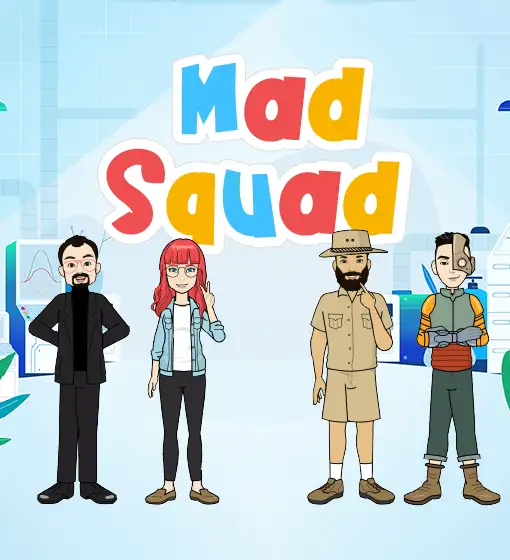
Modern Application Development (MAD) is a complex process that uses a multitude of technologies and tools. MAD Squad comics and its characters are created to showcase and communicate Everforth Quinnox’s services in an engaging way and build a relatable story for its customers and potential clients.
Read more
Learn how our Modern Application Development solutions have accelerated our client’s journey towards becoming an intelligent enterprise.
In recent years, with the advent of emerging technologies such as cloud, AI/ML, IoT, data analytics, etc., the IT landscape has undergone a drastic transformation. These are top 7 approaches to break the legacy conundrum
Read moreLegacy systems are often considered the backbone of an organization's technology infrastructure.
Read moreAccording to AWS Report, 67% of businesses believe that to stay competitive, picking up modern applications is essential. That’s not all.
Read moreThe steps involved in modern application development typically include requirements gathering, design, development, testing, deployment, and ongoing maintenance. These steps may vary depending on the specific development methodology used, such as Agile or DevOps.
Modern Application Development ensures security and data protection through various measures, including secure coding practices, encryption, access controls, authentication mechanisms, and regular security assessments. MAD frameworks and tools also offer features like secure APIs and identity management to safeguard data.
Potential risks or challenges in adopting modern applications include security vulnerabilities, data breaches, integration complexities, scalability issues, and the need for continuous updates and maintenance. Organizations must also address skill gaps, cultural resistance, and compatibility concerns with legacy systems.
Yes, modern applications can be integrated with existing enterprise systems. Various integration approaches, such as APIs, microservices, and middleware, enable seamless communication and data exchange between modern applications and legacy systems. Integration efforts should consider data formats, protocols, and security requirements for successful interoperability.
Yes, MAD frameworks and tools often support cross-platform development, allowing developers to create applications that can run on multiple operating systems and devices
Modern application development emphasizes principles such as scalability, modularity, flexibility, and user-centric design. It focuses on building applications that can adapt to changing requirements and deliver a seamless user experience.
Traditional application development often follows a monolithic architecture, has longer release cycles, and relies on manual processes. Modern application development embraces modular, distributed architectures, utilizes agile methodologies, leverages cloud and DevOps practices, and emphasizes automation and rapid iteration for faster delivery of software.
Challenges of adopting microservices architecture include increased complexity in managing and monitoring multiple services, ensuring inter-service communication, handling data consistency, and dealing with the operational overhead of managing a distributed system.
Benefits of using microservices for application development include improved scalability, agility, and fault tolerance. It enables teams to work independently on different services, promotes easier deployment and scaling, and allows for technology diversity and faster innovation.
Key components of the cloud-native approach include containerization, orchestration platforms (e.g., Kubernetes), microservices architecture, infrastructure-as-code, and DevOps practices. These components enable scalability, resilience, and rapid deployment in cloud environments.
Migrating from legacy systems to modern applications offers benefits such as improved performance, scalability, security, and agility. It allows businesses to leverage modern technologies, enhance user experience, streamline processes, and reduce maintenance and operational costs.
Current trends in modern application development include serverless computing, low-code/no-code platforms, AI and machine learning integration, edge computing, progressive web applications, and the adoption of cloud-native architectures.
CI/CD (Continuous Integration and Continuous Deployment) is important in modern app development as it enables frequent and automated software builds, testing, and deployment. It helps ensure faster time to market, better software quality, and easier maintenance and updates.
Application development as a service (ADaS) treats the software delivery lifecycle itself as a managed, productized system rather than a series of ad hoc projects. Unlike traditional development, where workflows are manual, non-repeatable, and dependent on individual contributors, ADaS makes every pipeline, template, agent configuration, and governance rule a versionable, reusable asset. The result is a delivery model that is faster, more consistent, and directly tied to business outcomes rather than hours spent. Everforth Quinnox’s QoCreate platform is built on this principle, transforming how enterprises plan, build, validate, and evolve software at scale.
A modern application development platform should do more than automate isolated tasks. Enterprises should look for a platform that unifies the entire software delivery lifecycle, connecting requirements, development, testing, security, and operations into a single, observable system. Key capabilities to evaluate include AI-driven workflow orchestration, reusable pipeline templates, agent governance and oversight, continuous security integration, and pluggable model registries that prevent vendor lock-in. Equally important is how the platform aligns delivery to business outcomes rather than effort metrics. Everforth Quinnox’s QoCreate platform is designed with exactly these principles and purpose-built for enterprises that need predictable, scalable, and intelligence-driven software delivery.Â
Want to learn more about how our Modern Application Development services can benefit your organization? Get in touch to speak to one of our experts.